Crawl Space Structural Repair & Support Jacks in Waldorf, MD
Sagging or uneven floors can sometimes be related to problems with the beams, joists, columns, or piers that support the floor system from within the crawl space. When a main beam deflects, a support pier settles, or framing deteriorates, the floor above loses consistent support and begins to dip or bounce. Crawl space structural repair addresses those support problems directly—through beam reinforcement, joist repair, or the installation of adjustable structural support jacks where appropriate—rather than treating the visible floor slope as the problem itself.
Signs of Structural Problems Beneath a Crawl Space
The signs of a crawl space structural problem usually show up in the floors above long before they are visible in the crawl space itself. Several structural or moisture-related factors can create similar symptoms, which is why the floor signs are an invitation to inspect the supports below rather than a conclusion on their own.
Sagging Floors
A visible dip or slope in finished floors, often toward the center of the home where main-beam support is weakest.
Bouncy Floors
Floors that flex underfoot, usually from undersized joists or support spacing that is too wide for the span.
Uneven Floors
Floor surfaces that are no longer level, which can reflect settled crawl space supports or beam deflection.
Interior Gaps
Gaps opening between baseboards and floors or between walls and ceilings as the floor structure moves.
Doors Sticking
Interior doors that rub or bind because the floor or wall framing has shifted beneath them.
Cracked Finishes
Drywall or plaster cracks that follow the movement of the floor structure below.
Damaged Beams
Main beams or joists showing splitting, sagging, or rot visible within the crawl space.
Deflected Framing
Joists or beams that have bowed under load, visible as a curve along their length.
Inadequate Supports
Support piers or columns that are too few, too far apart, or undersized for the load they carry.
Column or Pier Movement
Support posts or block piers that have tilted, settled, or shifted out of position.
Multiple factors can create similar symptoms. A bouncy floor can come from undersized joists, a settled pier, or moisture-damaged framing. A sagging floor can come from a deflected beam or from foundation settlement beneath the crawl space. Identifying which support element is the cause is the purpose of inspecting the crawl space structure directly.
What Causes Crawl Space Structural Problems?
Crawl space structural problems develop when the supports beneath the floor can no longer carry the load they were intended to carry. The cause may be in the support itself, in the framing above it, or in the moisture conditions of the crawl space environment. No single cause applies to every home, and the conditions at a given property require inspection rather than assumption.
Insufficient Beam Support
Main beams sized or supported for a lighter load than the structure now carries, allowing deflection.
Long Spans
Joist or beam spans that exceed what the framing can carry without intermediate support.
Settled Support Points
Crawl space piers or footings that have settled, dropping the beam they support.
Damaged Wood Framing
Splits, checks, or structural damage in beams and joists that reduce their load capacity.
Moisture Deterioration
Wood rot and fungal growth from elevated crawl space moisture that weaken load-bearing framing.
Poorly Positioned Supports
Supports placed where soil bearing is poor or where loads are not transferred effectively.
Changing Structural Loads
Additions, renovations, or altered loads that exceed the original support design.
Movement at Piers or Columns
Support posts that have tilted, rusted, or shifted, reducing effective bearing.
Age-Related Deterioration
Long-term wear and material fatigue that reduce framing and support capacity over time.
Do not assume moisture damage without inspection. While moisture is a common contributor to crawl space framing problems, not every sagging floor is caused by rot. Framing can deflect from span and load alone. A crawl space inspection confirms whether moisture, support, or framing is the actual cause before any repair is recommended.
Crawl Space Support and Structural Repair Options
Crawl space structural repair options range from adding intermediate support to reinforcing or replacing damaged framing. The right approach depends on whether the problem is the support, the beam, the joists, or the footing beneath the supports.
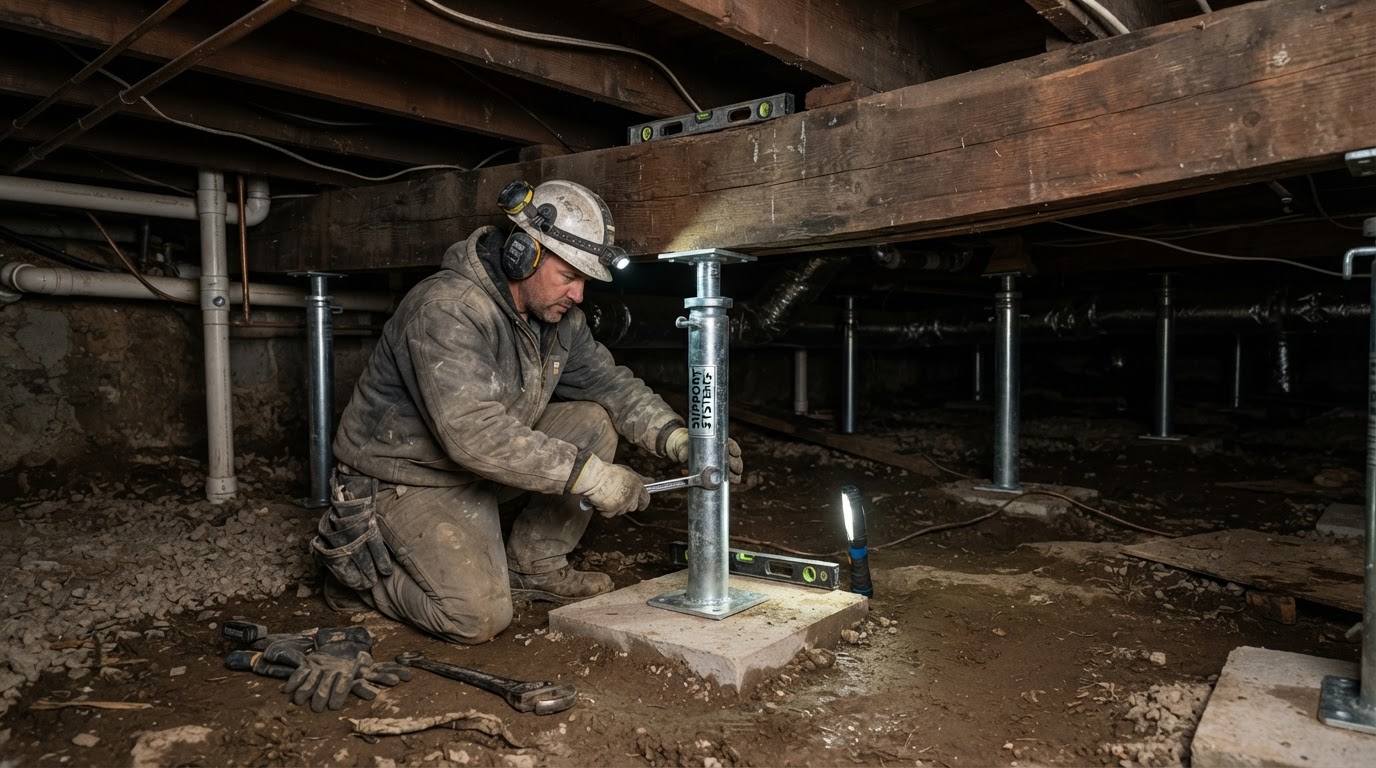
Adjustable Support Jacks
Steel adjustable columns set on reinforced footings beneath beams, allowing controlled transfer of the floor load to stable bearing.
Beam Reinforcement
Sistering additional framing to an existing beam to increase its load capacity and reduce deflection along the span.
Beam Replacement
Replacing a beam that is severely damaged, rotted, or undersized where reinforcement is not sufficient.
Joist Repair & Reinforcement
Reinforcing or sistering joists that have deflected, split, or lost strength to restore floor support.
Support Columns
Additional or replacement structural columns where existing supports are inadequate or have failed.
Footing & Support Improvements
Adding or improving the footings beneath supports so the load transfers to competent bearing material.
Temporary jack posts
Temporary screw jacks are designed for short-term construction support and are not intended to carry a home's load indefinitely. Relying on them as permanent support is not a structural repair and can leave the floor under-supported over time.
Permanent structural support systems
Permanent support systems use engineered, adjustable steel posts set on proper footings with corrosion-resistant components suited to the crawl space environment. Improvised DIY jacking is not a substitute for a system designed to carry the load long-term.
Crawl Space Structural Repair Near Waldorf, MD
The repair process moves from the visible floor symptoms to the supports below, identifying which element is failing and addressing it directly. Controlled adjustments are made gradually to avoid overstressing the floor system.
Evaluate Floor Symptoms
Review where floors sag, slope, or bounce and map the affected areas.
Inspect Crawl Space Structure
Examine beams, joists, piers, and columns within the crawl space for condition and movement.
Identify Affected Members
Pinpoint which beams, joists, or supports are deflecting, damaged, or inadequate.
Review Existing Supports
Assess the spacing, footing, and capacity of the current support system.
Develop Repair Approach
Select the appropriate combination of reinforcement, replacement, or added support.
Install or Reinforce
Install support jacks, sister framing, or replacement members using structural materials.
Controlled Adjustments
Raise or adjust supports gradually where appropriate to avoid overstressing the floor system.
Reassess Framing
Confirm the floor response and review any drainage or moisture conditions to protect the repair.
Crawl Space Structural Repair FAQs
Direct answers about support jacks, sagging beams, bouncy floors, and how crawl space structural problems are evaluated and repaired for homes in Waldorf and Southern Maryland.
Sagging Floors or Crawl Space Support Concerns?
If your floors are sagging, bouncing, or uneven, the cause may be in the supports beneath them. Discussing what you are seeing and having the crawl space structure inspected is the first step toward identifying whether the issue is the beams, the supports, or the framing. Request an inspection or call to speak with a foundation repair contractor near Waldorf.
Waldorf Foundation Repair • Serving Waldorf, MD 20601 • Charles County • Southern Maryland