Foundation Repair in Washington, DC
Foundation concerns in Washington, DC—cracks, settlement, structural movement, wall problems, and water intrusion—are evaluated by Waldorf Foundation Repair to determine what is moving and why. Because the same visible symptom can stem from several causes, the appropriate repair is matched to the underlying condition found during evaluation, not to the symptom that first drew attention.
When a Washington, DC Property May Need Foundation Repair
Foundation movement develops gradually and reveals itself through recognizable patterns. A single crack may be insignificant, but a combination of cracking, shifting, and settling across the structure tells a more complete story. The signs below are reasons to request an evaluation—not proof of any particular structural condition.
Foundation Cracks
Cracks of any orientation can reflect shrinkage, settlement, or pressure; their significance depends on width, pattern, and whether they are active.
Stair-Step Cracks
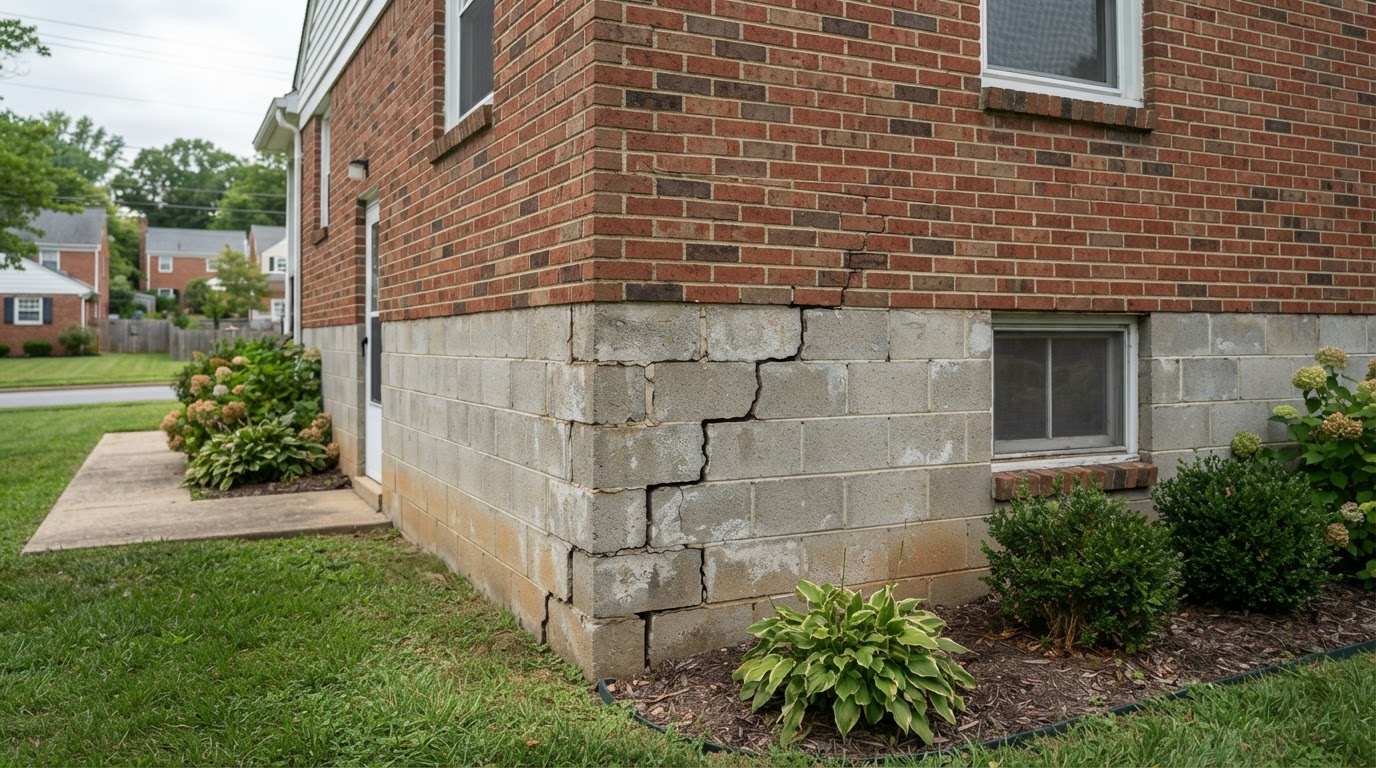
Cracks stepping through block mortar joints often accompany differential settlement or wall movement and follow the weakest path in the masonry.
Horizontal Wall Cracks
A horizontal crack near the midpoint of a basement wall frequently signals lateral pressure pushing inward and warrants deflection measurement.
Bowing Walls
Inward deflection of foundation walls under lateral soil and hydrostatic pressure, often paired with horizontal cracking.
Uneven or Sagging Floors
Sloping, dipping, or bouncing floors that can originate from footing settlement, crawl space support failure, or joist deflection.
Sticking Doors and Windows
Frames that bind or no longer latch can indicate framing has shifted as the foundation beneath it moved unevenly.
Gaps Around Openings
Separation between walls and doors, windows, or trim develops when different parts of the structure move at different rates.
Water Through Cracks
Moisture entering through foundation cracks can both result from and contribute to movement, and may indicate a crack is active.
A crack is not the problem—it is the result of a problem. Two Washington, DC homes with identical stair-step cracks may have entirely different causes. Identifying the cause is what determines whether stabilization, crack repair, drainage work, or a combination is appropriate.
What Causes Foundation Movement Near Washington, DC?
Foundations depend on the soil beneath and around them for support. When that support changes—through moisture, drainage, erosion, or load—the foundation moves. Several factors can contribute, often in combination, and the specific cause at a Washington, DC property is identified through evaluation rather than assumed.
- Changes in soil moisture from seasonal wet and dry cycles
- Poor drainage, clogged gutters, or misdirected downspouts
- Erosion of supporting soil from concentrated water flow
- Long-term consolidation of fill or native soils under load
- Hydrostatic pressure from saturated backfill against walls
- Plumbing or drainage leaks beneath or near footings
- Construction or load changes such as additions
- Inadequate original support in specific soil conditions
What does a foundation inspection look for?
A foundation inspection evaluates the structure systematically rather than focusing on a single crack. The goal is to determine whether movement is occurring, where it is concentrated, and what is driving it. For a Washington, DC property, an inspection typically reviews:
- Crack location, width, direction, and pattern
- Floor elevation changes across the footprint
- Wall plumb and inward or outward movement
- Exterior grading, drainage, and downspout discharge
- Crawl space or basement support conditions
- Door and window frame alignment
- Chimney and porch attachment separation
- Signs of water intrusion or moisture damage
Foundation Repair Services in Washington, DC
Washington, DC property owners have access to the complete range of structural foundation services. Each service addresses a distinct category of foundation concern, and the appropriate combination is determined by what the on-site evaluation identifies as the cause.
Foundation Repair
Comprehensive structural stabilization covering settlement, cracking, wall movement, and support loss for Washington, DC residential and commercial properties.
Foundation Crack Repair
Evaluation and repair of foundation wall cracking, distinguishing stable cracks from those tied to ongoing movement before selecting a method.
Settlement & Sinking Repair
Stabilization of sinking or settling sections with pier systems and underpinning that transfer load to competent bearing material.
Bowing Basement Wall Repair
Repair of inward wall movement and deflection, addressing the lateral pressure behind bowing and horizontal cracking.
Helical Pier Installation
Screw-type steel piers rotated into bearing strata for settlement stabilization and lighter structural support applications.
Push Pier Installation
Hydraulically driven steel piers that use the structure's weight to reach firm bearing material for heavier settlement repair.
Foundation Underpinning
Strengthening or extending footing support to arrest settlement where original support is insufficient for the conditions.
Basement Wall Stabilization
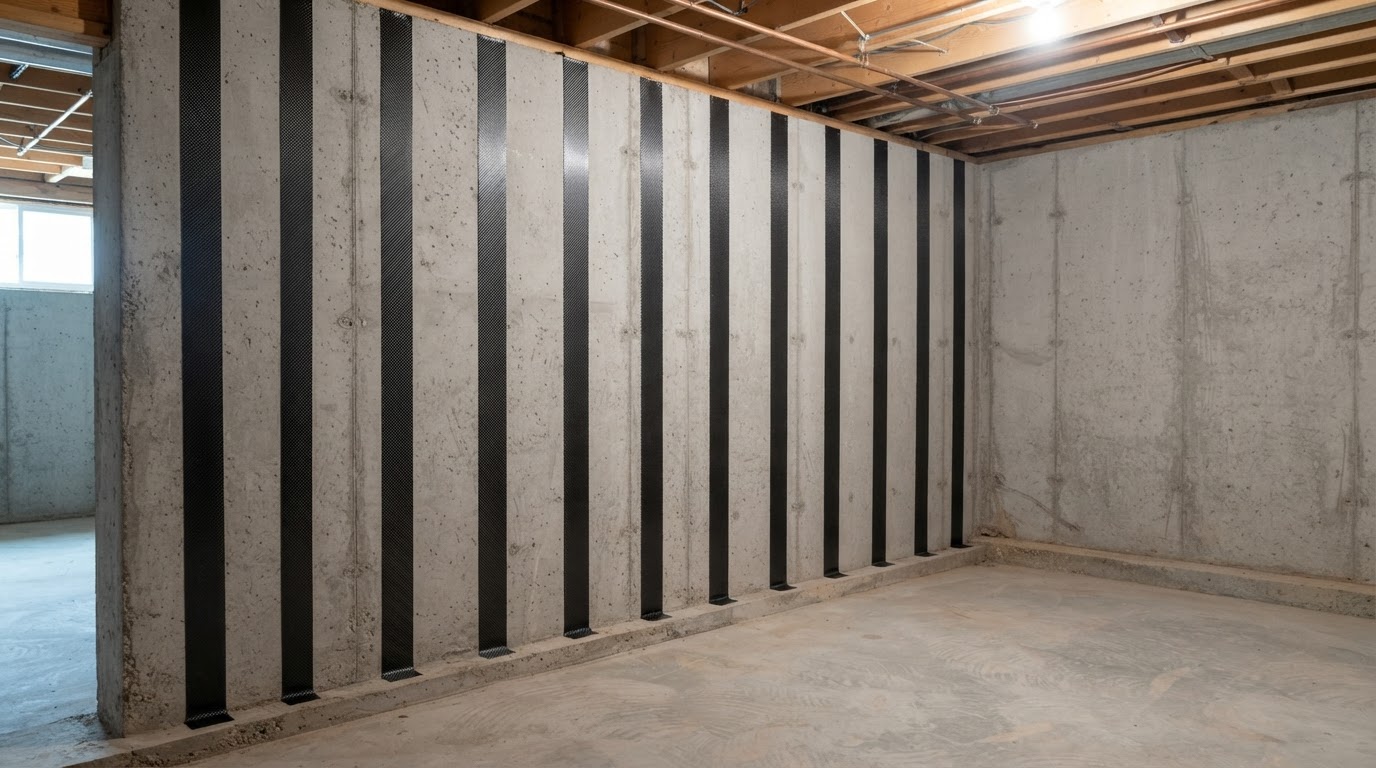
Carbon fiber reinforcement and steel bracing for cracked or moving walls where those methods suit the deflection measured.
Crawl Space Structural Repair
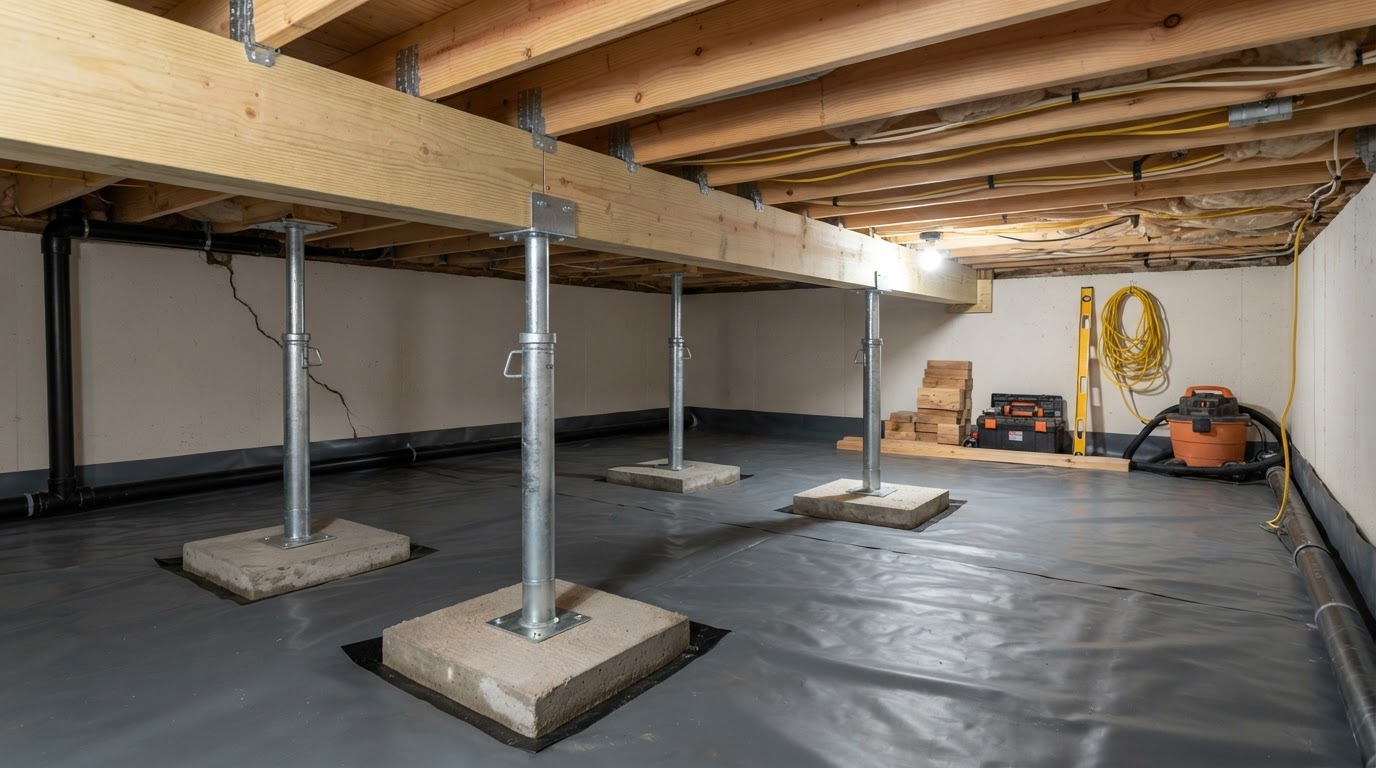
Support jacks, beam reinforcement, and joist repair beneath homes with settled, deteriorated, or inadequate crawl space support.
Sagging & Uneven Floor Repair
Diagnosis and repair of uneven floors, distinguishing foundation settlement from floor framing movement as the source.
Block & Concrete Repair
Repair of block and poured concrete foundations, addressing the distinct crack patterns and behaviors of each material.
Basement Foundation Waterproofing
Leak repair and waterproofing for water through cracks and joints, performed alongside any required structural stabilization.
Commercial Foundation Repair
Structural stabilization for commercial and light-commercial buildings, accounting for heavier loads and access considerations.
Choosing the Appropriate Foundation Repair Method
No single repair method fits every foundation. Each technology addresses a specific failure mechanism—settlement, lateral wall pressure, support loss, or moisture. The proper method depends on the condition identified during evaluation.
Helical Piers
Steel shafts with helical plates rotated into competent bearing strata for settlement stabilization and addition support.
Push Piers
Hydraulically driven steel sections that transfer heavier structure loads down to firm bearing material.
Underpinning
Strengthening or extending footing support to arrest settlement and restore load-bearing capacity.
Wall Stabilization
Carbon fiber, steel bracing, or anchors that resist inward basement wall movement and deflection.
Crawl Space Support
Adjustable steel jacks on reinforced footings that re-support sagging beams and level interior floors.
Crack & Water Management
Injection, sealing, and drainage measures that address moisture alongside structural conditions.
Matching the Method to the Condition
A general guide—actual selection depends on a site evaluation of the foundation.
| Condition / Symptom | Possible Repair Category | What the Method Addresses |
|---|---|---|
| Sinking or settling section | Helical or push piers | Loss of vertical support beneath footings |
| Inward bowing wall | Carbon fiber or steel bracing | Lateral wall pressure and deflection |
| Sagging crawl space floors | Support jacks and beam repair | Inadequate or settled floor support |
| Leaking foundation crack | Crack injection and sealing | Water intrusion through a stable crack |
| Widening or active crack | Stabilization before sealing | Underlying movement driving the crack |
| Stair-step block cracking | Masonry repair with stabilization | Settlement or wall movement in block walls |
How Foundation Problems Are Evaluated
The repair workflow moves from understanding the visible problem to completing and reviewing the stabilization work. Engineering specifics vary by property, but the sequence stays consistent.
Discuss Visible Symptoms
We review your observations—cracks, sticking doors, sloping floors, or water intrusion—and the history of changes.
Inspect Accessible Areas
An on-site evaluation examines crack patterns, wall plumb, floor elevations, and exterior drainage.
Evaluate Foundation Conditions
We determine whether symptoms reflect settlement, lateral pressure, support loss, or another condition.
Identify Structural Concerns
The evaluation pinpoints where movement is concentrated and what is driving it.
Determine Repair Approach
A stabilization method is matched to the identified cause—piers, wall reinforcement, underpinning, or support jacks.
Complete Approved Repair
Stabilization work is performed using professional equipment and structural materials.
Review Repaired Areas
We walk through completed work and discuss drainage and moisture maintenance considerations.
Why Repair Method Matters
Sealing a crack will not stop the settlement beneath it; installing piers will not reinforce a bowing wall. Each method solves a different category of problem. Matching the method to the actual cause is what makes a repair effective, which is why evaluation comes before recommendation.
Serving Property Owners in and Around Washington, DC
Washington, DC is part of the broader service area covered from Waldorf. Whether the property is a single-family home, a multi-family building, a row house, or a light-commercial structure, the full range of foundation services described here is available.
Foundation concerns in Washington, DC are evaluated the same way they are throughout the service area: by reading the structure as a whole, identifying what is moving and why, and recommending a stabilization approach suited to the property. We do not assume a specific soil or drainage condition exists at any DC property without inspecting it, because conditions vary from site to site.
Nearby Service Areas
Foundation Repair FAQs for Washington, DC Property Owners
Direct answers to common questions about foundation movement, settlement, repair methods, and what to expect during an evaluation in Washington, DC.
Before & After Foundation Repair Transformations Near Washington, MD
The interactive comparisons below illustrate representative foundation and structural repair scenarios, including foundation repair, foundation crack repair, settlement and sinking foundation stabilization, bowing basement wall repair, helical and push pier installation, underpinning, basement wall stabilization and carbon-fiber reinforcement, crawl space structural repair, and sagging floor repair. These examples are intended to help you visualize common repair transformations rather than depict any specific property.
Interactive images are representative service examples intended to illustrate common foundation, basement-wall, pier, underpinning, crawl-space and structural-floor repair transformations. Actual repair methods, equipment, materials and finished appearance vary by property, structural conditions and site requirements.
 BeforeAfter
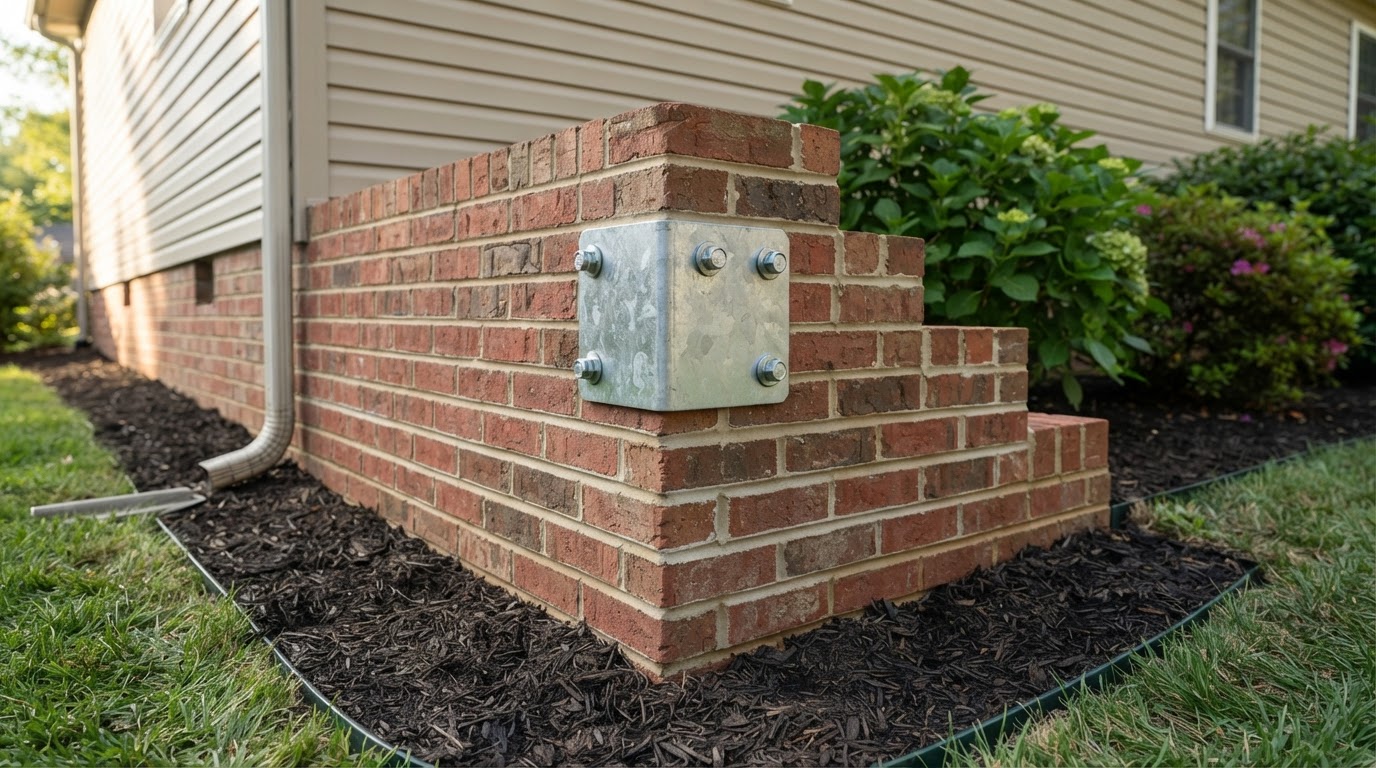
Foundation Repair Transformation in Washington
Foundation repair begins by identifying the cause and extent of structural movement before selecting a repair method suited to the affected foundation, load conditions, and property. The comparison below represents a general stabilization scenario; actual repair methods and finished appearance vary by property and conditions.
Explore foundation repair services in Washington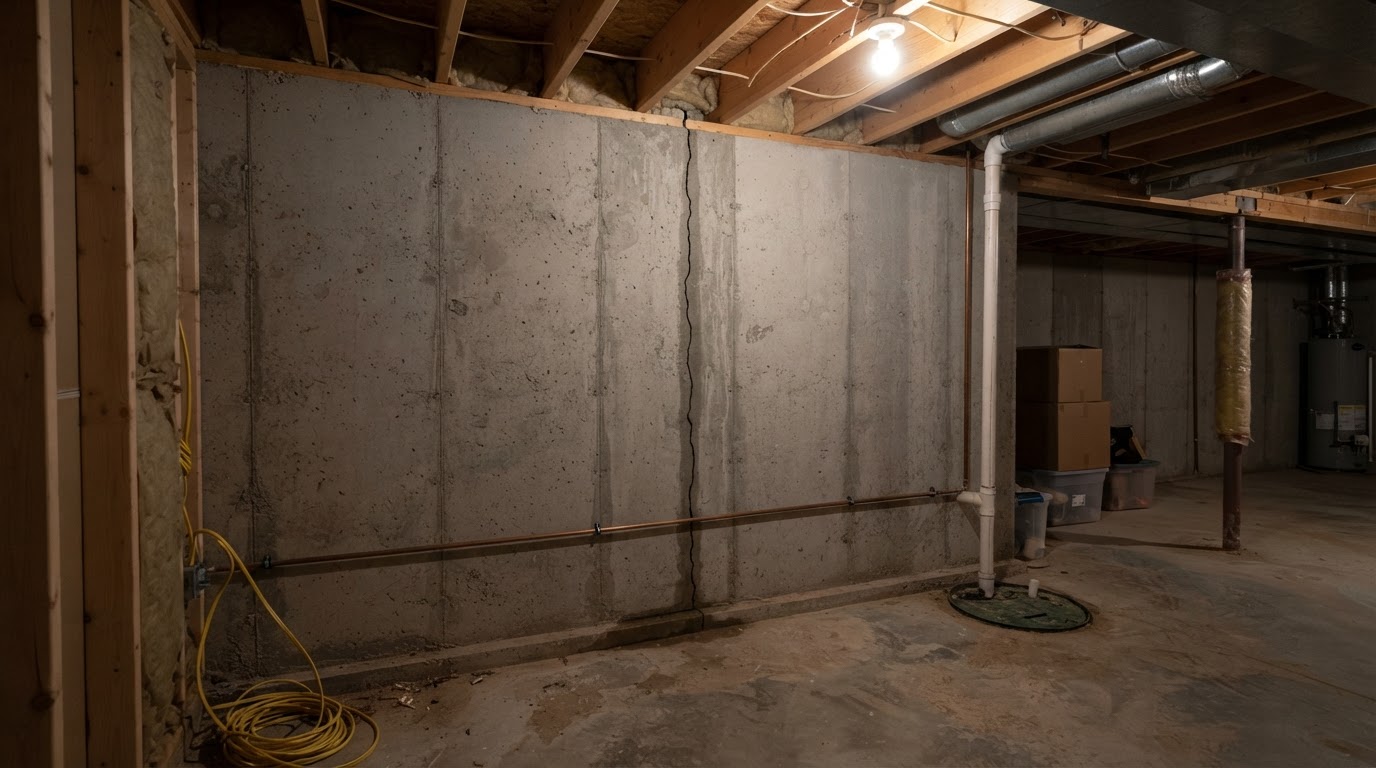
 BeforeAfter
Foundation Crack Repair Near Washington
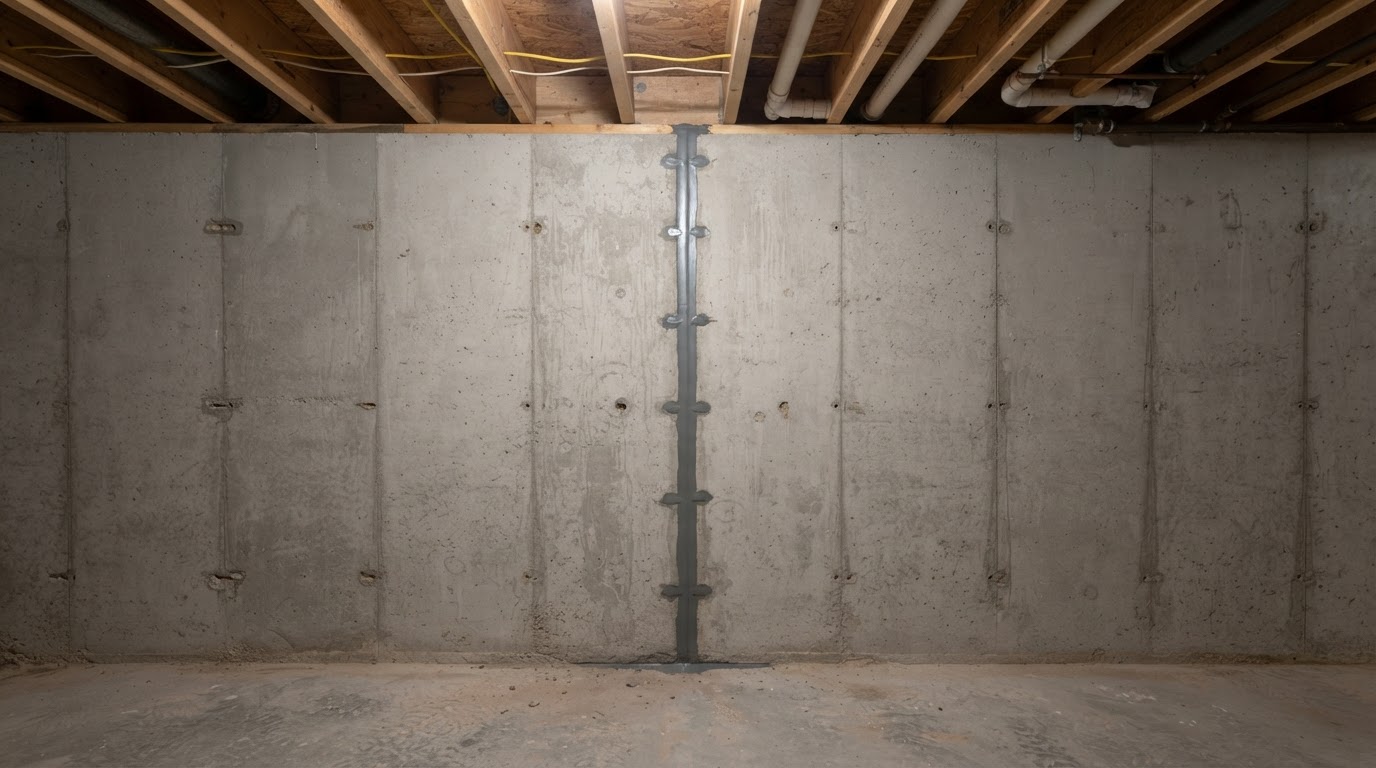
Foundation cracks vary in cause and significance, and the appropriate repair depends on crack location, movement, foundation material, and surrounding structural conditions. The interactive comparison illustrates a representative crack-sealing scenario for an accessible vertical crack.
View foundation crack repair options near Washington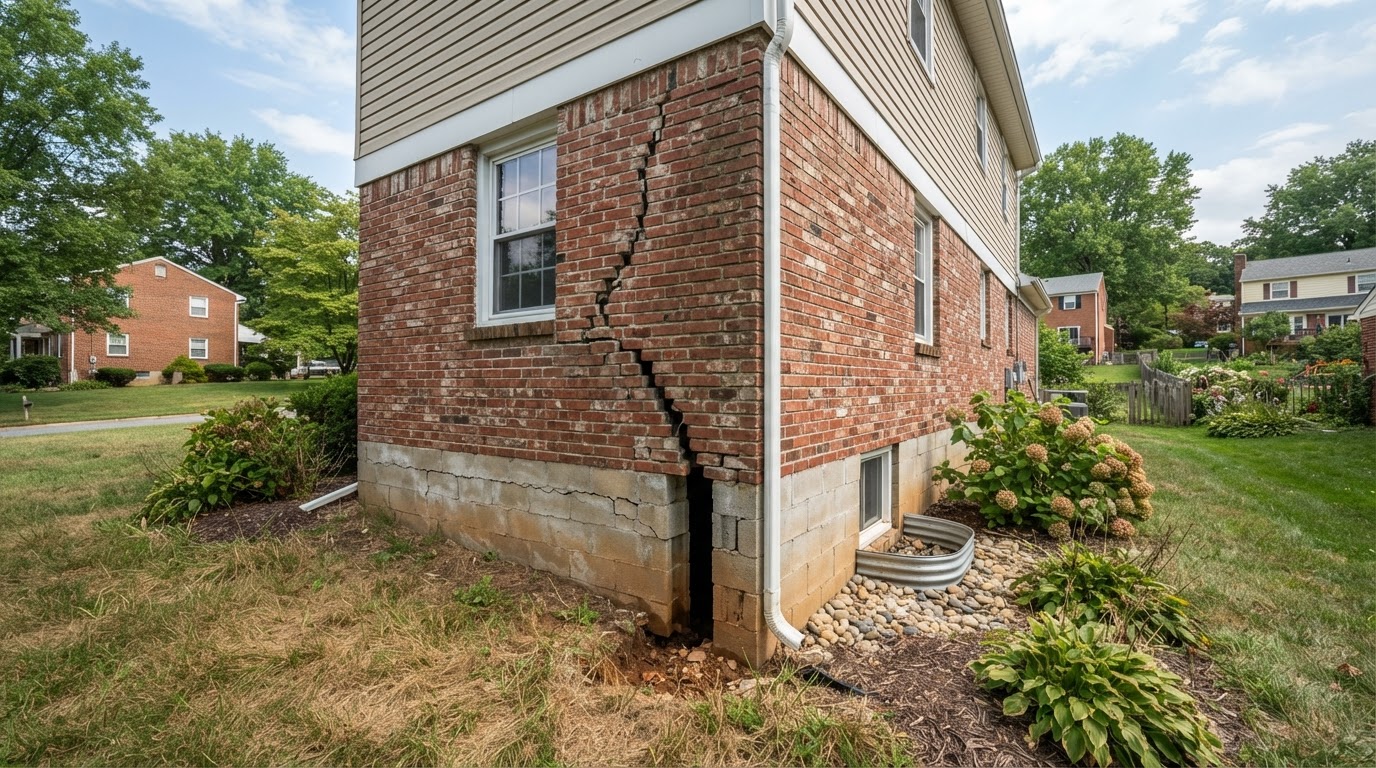
 BeforeAfter
Foundation Settlement & Sinking Repair in Washington
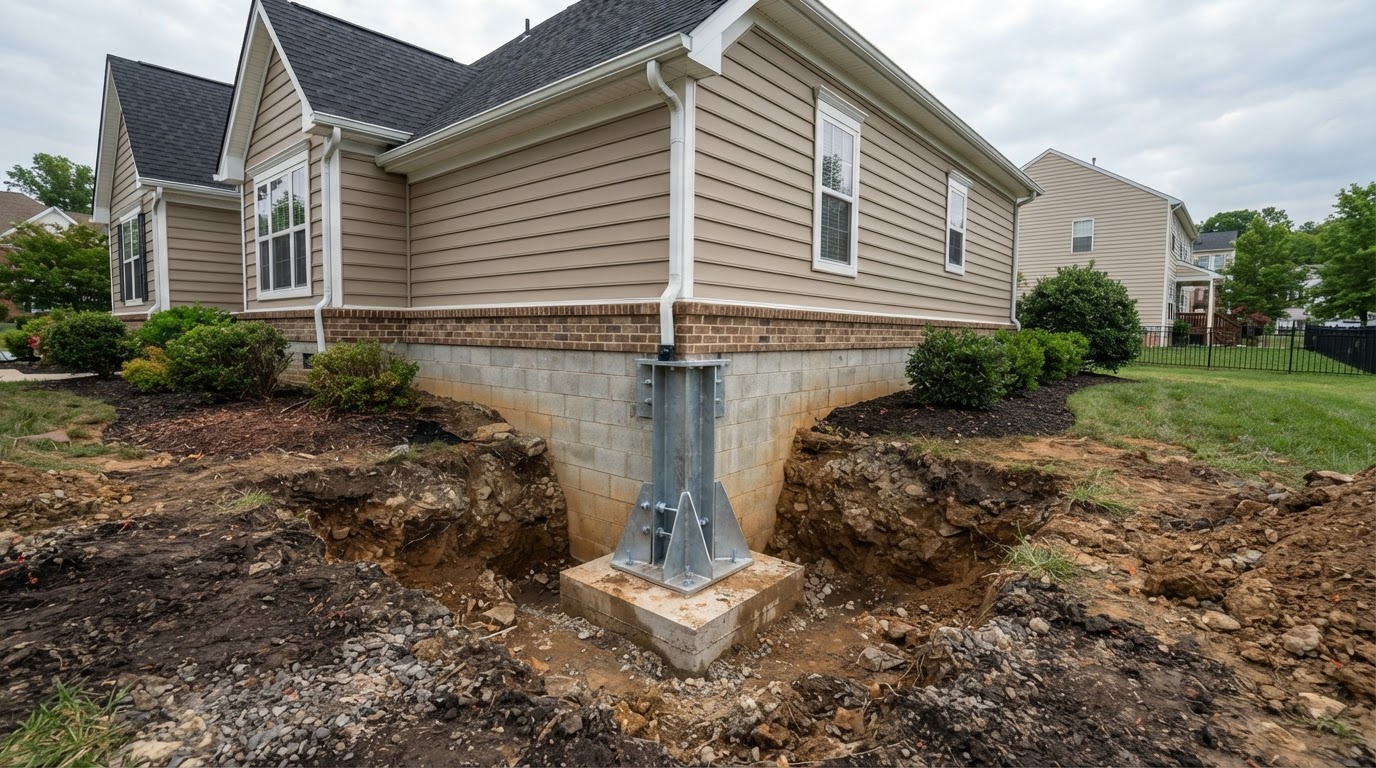
Settlement repair may involve stabilizing affected foundation sections when soil support, structural loading, or movement has caused the foundation to sink or shift. This comparison represents a localized pier-stabilization scenario; not every settled foundation can or should be returned to its exact original elevation.
Explore sinking foundation and settlement repair in Washington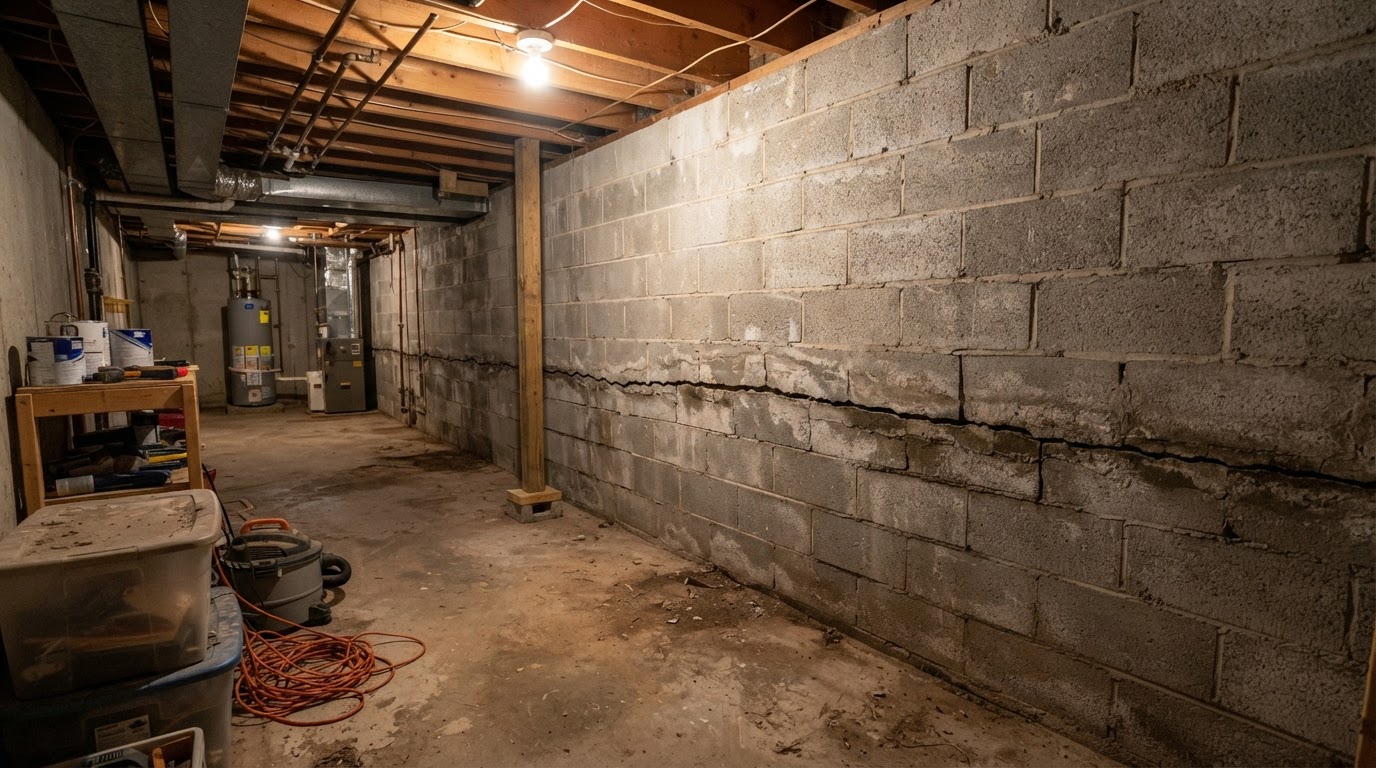
 BeforeAfter
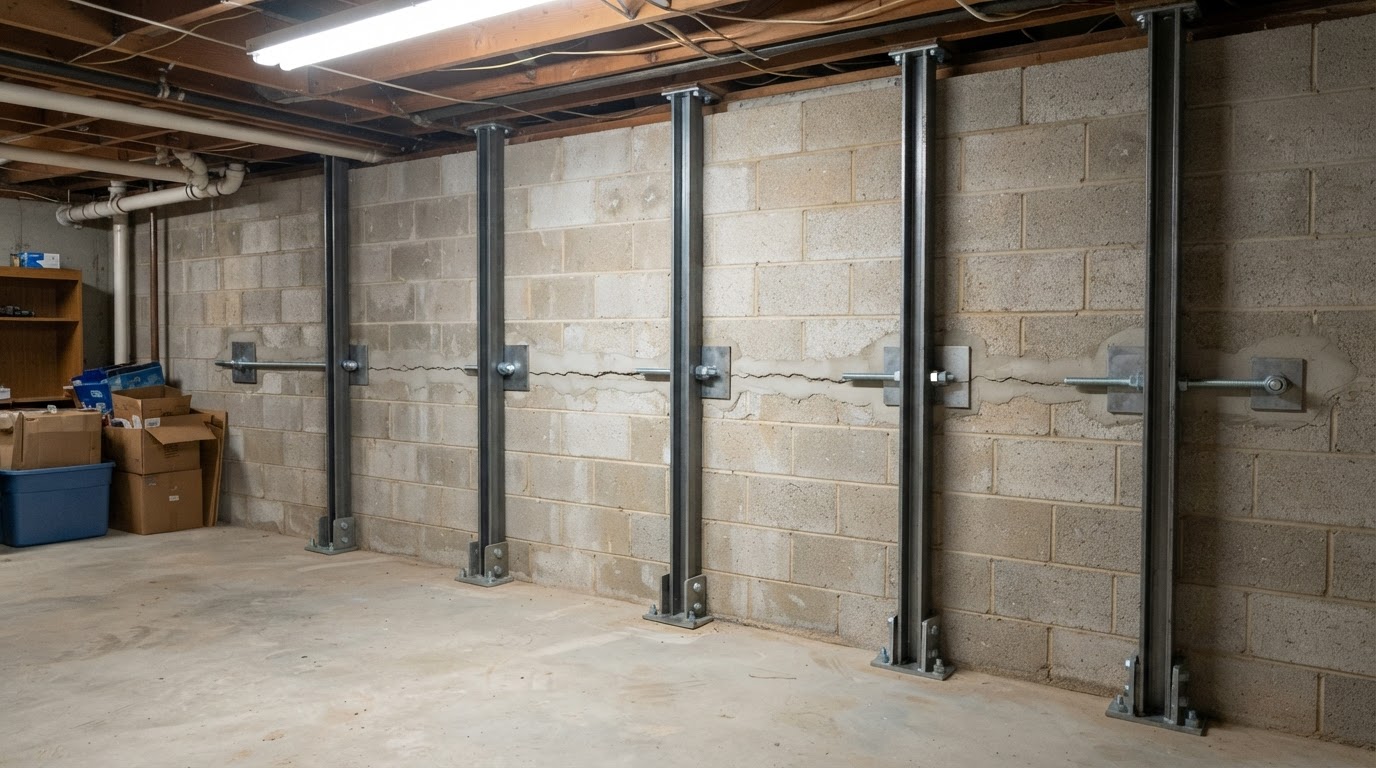
Bowing Basement Wall Repair Near Washington
Bowed or inward-moving basement walls require evaluation of wall movement and surrounding structural conditions before selecting an appropriate stabilization approach. The comparison shows a representative wall-anchor and brace stabilization scenario for a block foundation wall.
Learn about bowing basement wall repair near Washington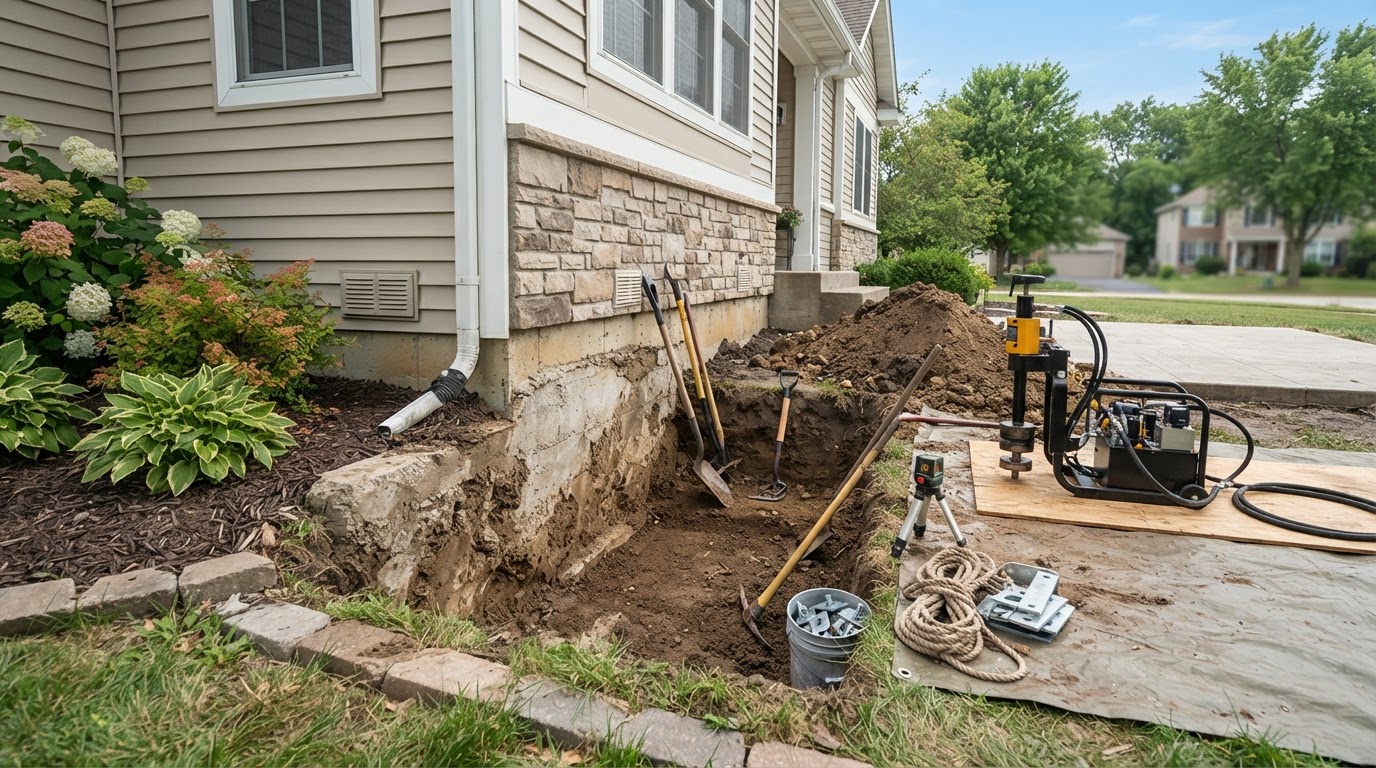
 BeforeAfter
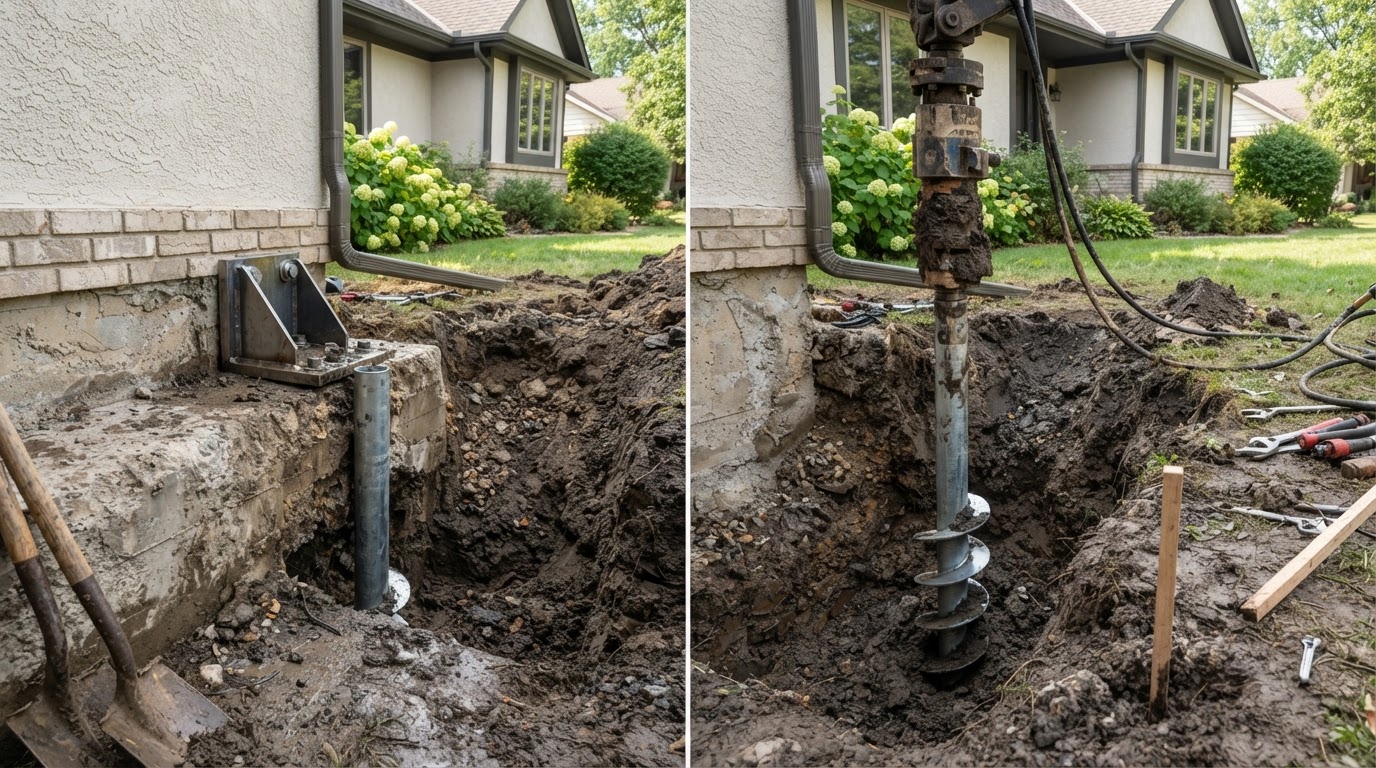
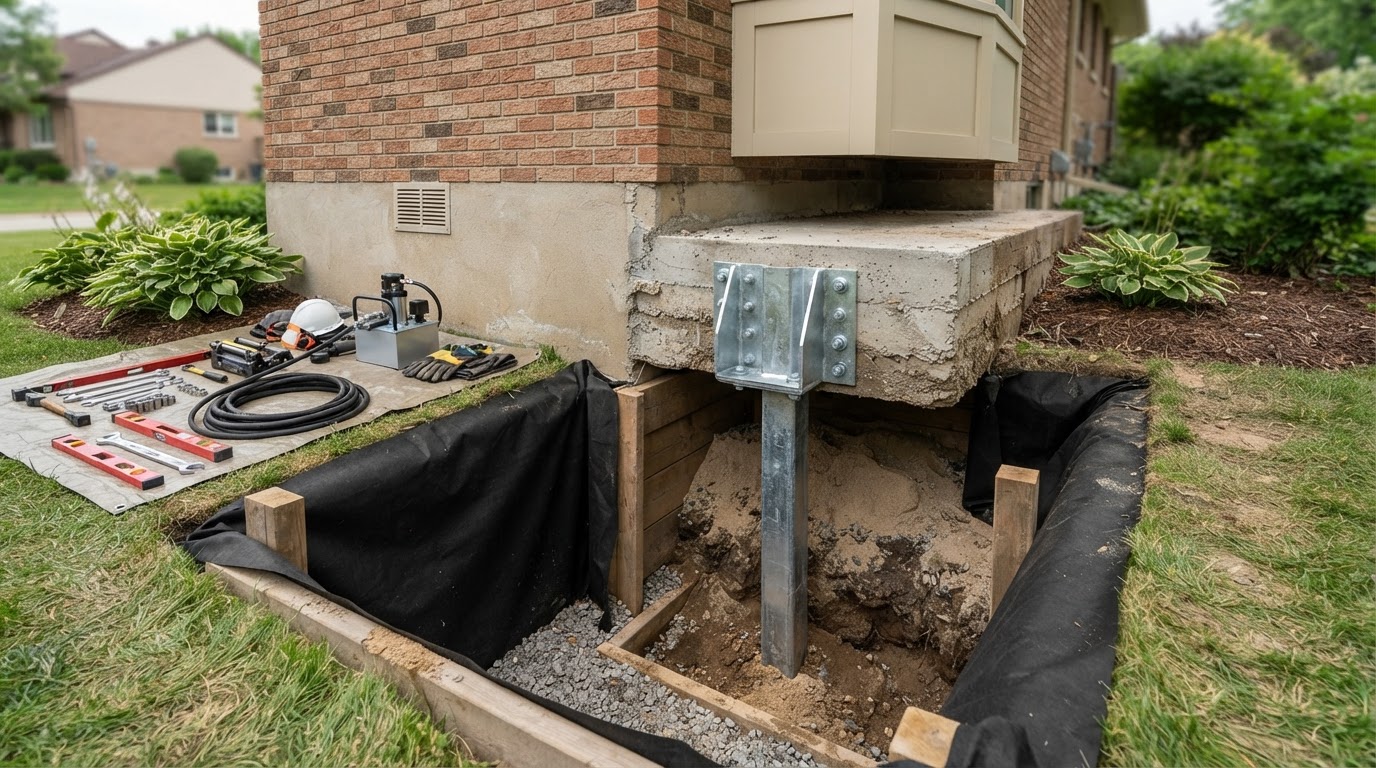
Helical Pier Installation in Washington
Helical piers are one potential deep-foundation stabilization method that may be used when site conditions, structural loading, and foundation configuration make the system appropriate. They are not suitable for every property; selection depends on a professional assessment.
Explore helical pier installation in Washington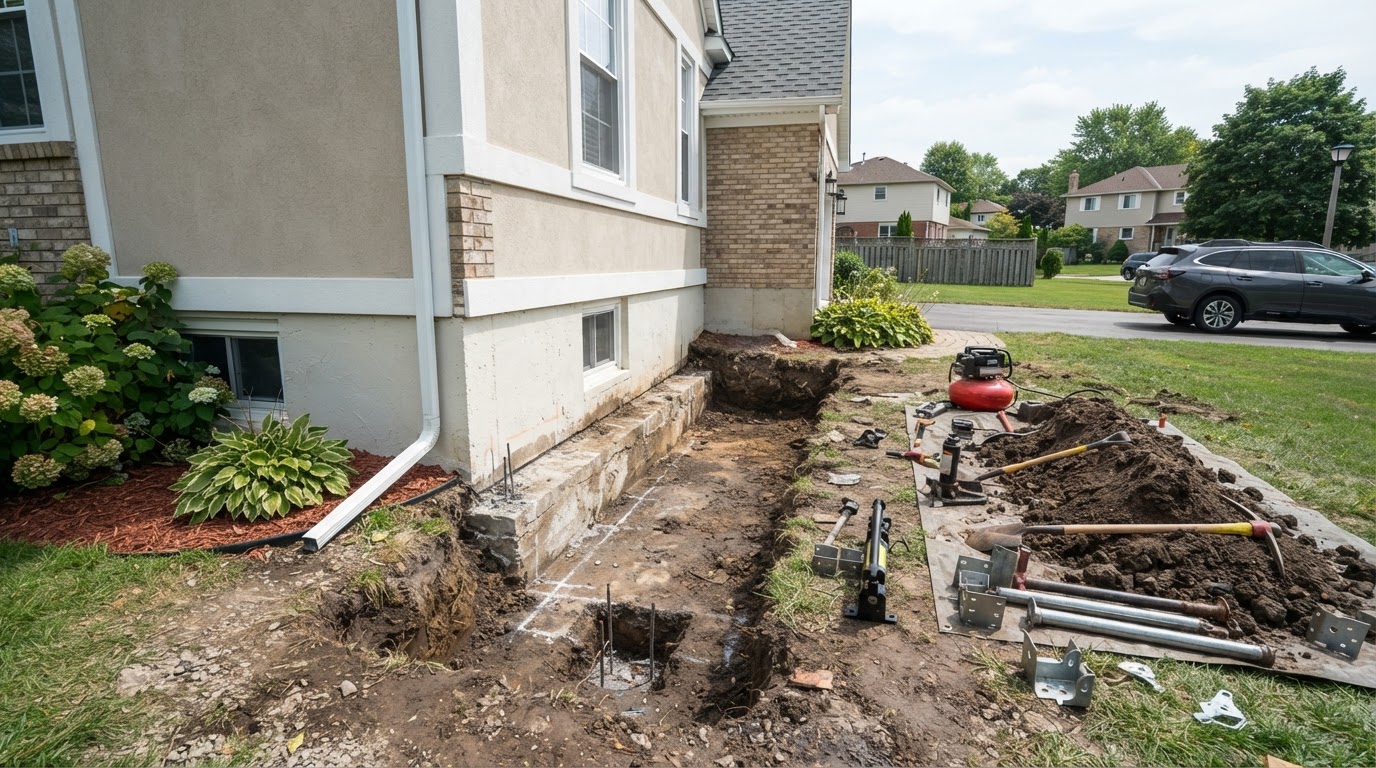
 BeforeAfter
Push Pier Installation Near Washington
Push piers may be used to transfer structural loads to more suitable bearing material when a professional assessment determines the method is appropriate for the foundation and site. This comparison represents a hydraulically driven push-pier stabilization installation.
View push pier foundation stabilization near Washington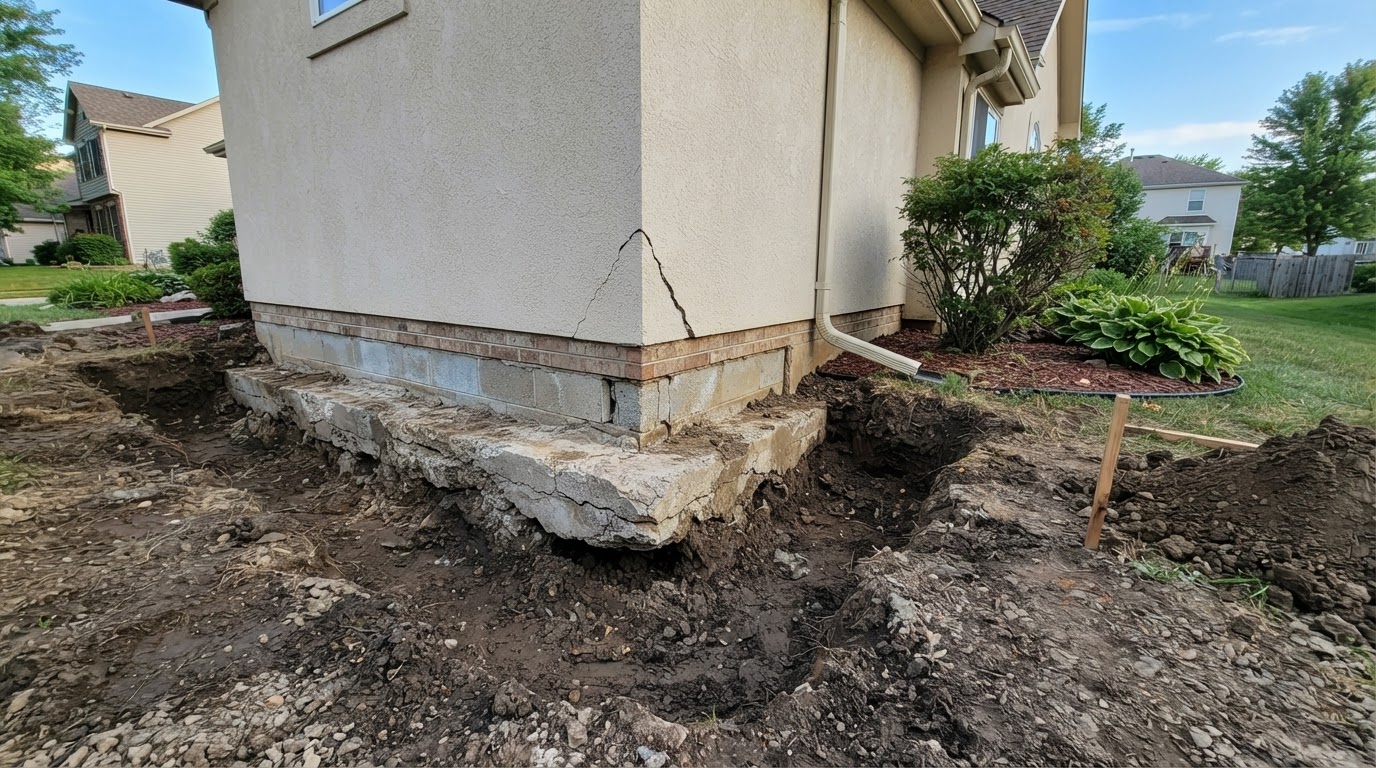
 BeforeAfter
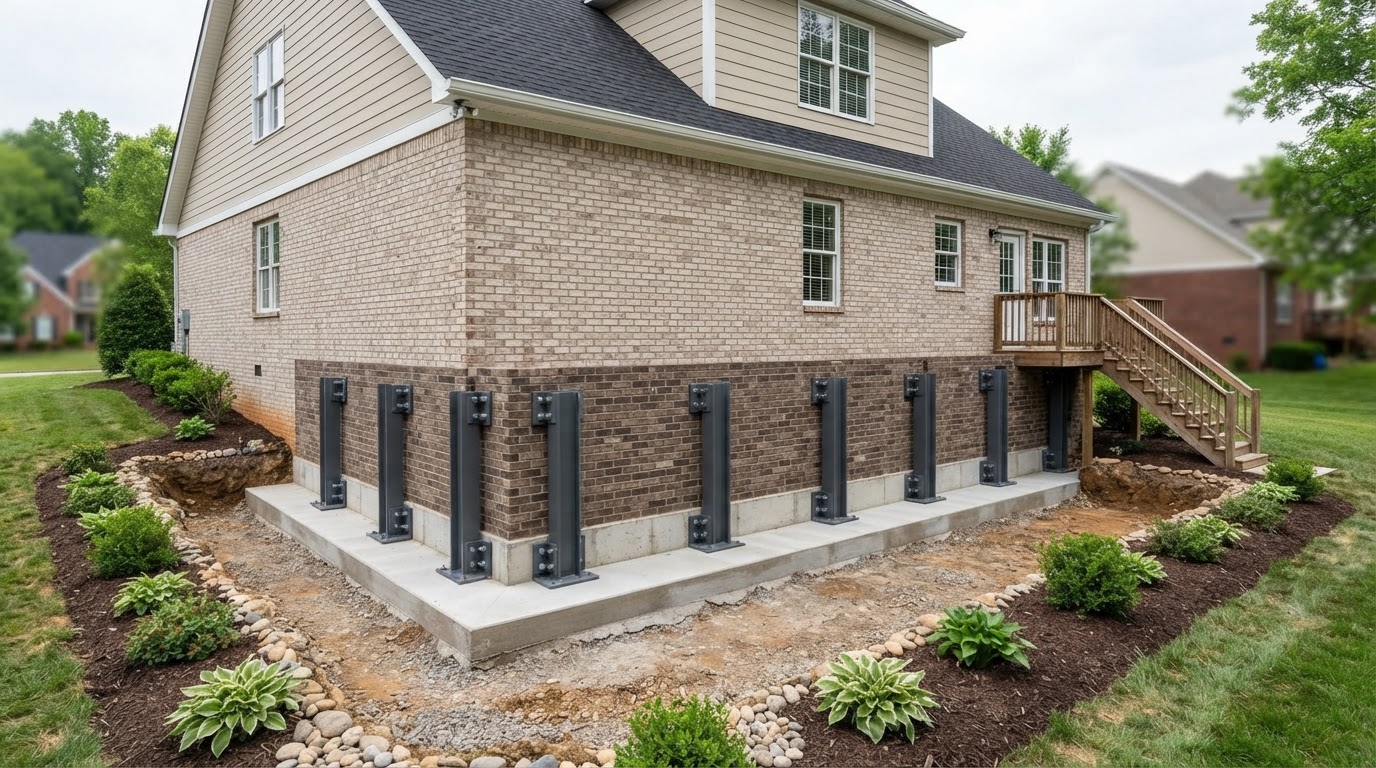
Foundation Underpinning in Washington
Foundation underpinning is intended to strengthen or stabilize existing foundation support when professional evaluation determines that additional structural support is required. The comparison illustrates a footing-reinforcement and support extension scenario.
Explore foundation underpinning services in Washington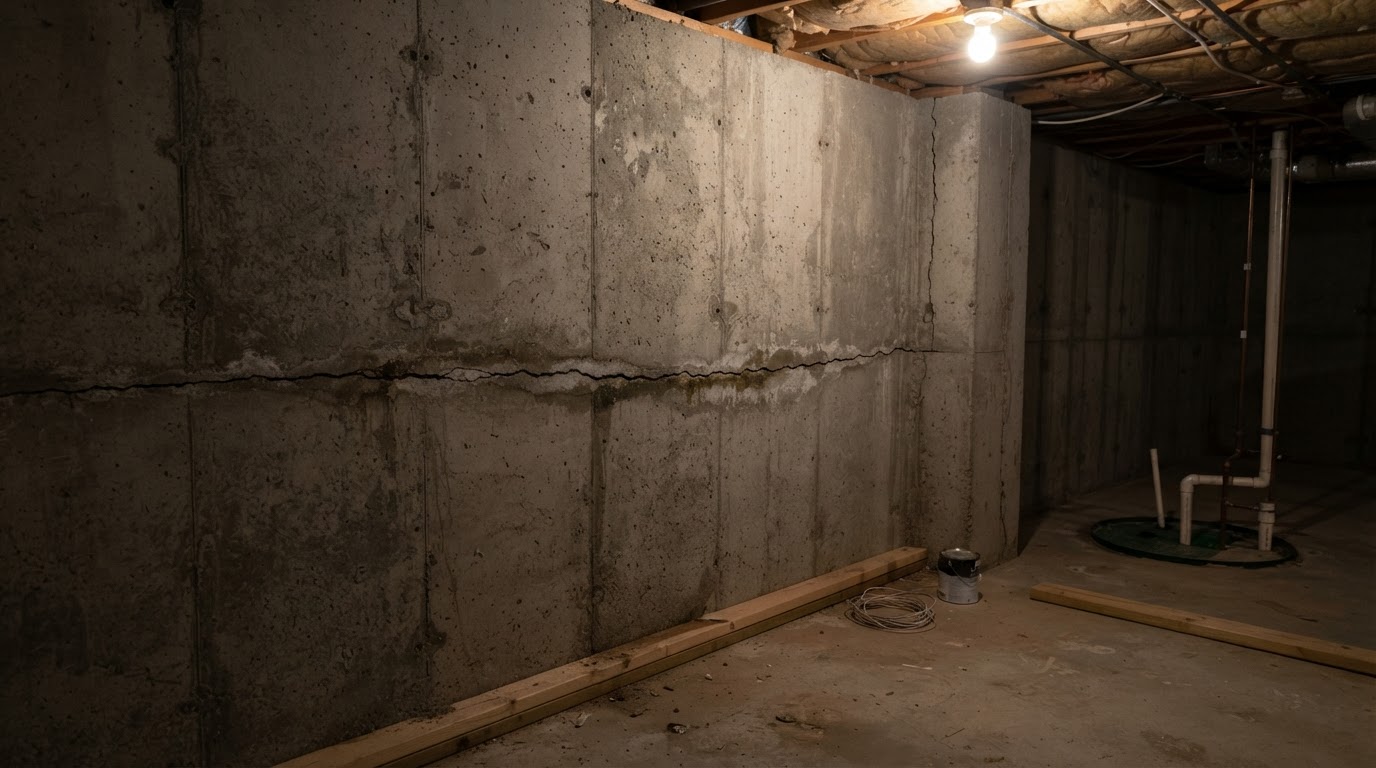
 BeforeAfter
Basement Wall Stabilization & Carbon Fiber Reinforcement Near Washington
Carbon-fiber reinforcement can be one method of stabilizing certain foundation-wall conditions when the wall, amount of movement, and structural requirements make that repair system appropriate. The comparison shows evenly spaced carbon-fiber straps bonded to a prepared wall surface.
Learn about basement wall stabilization near Washington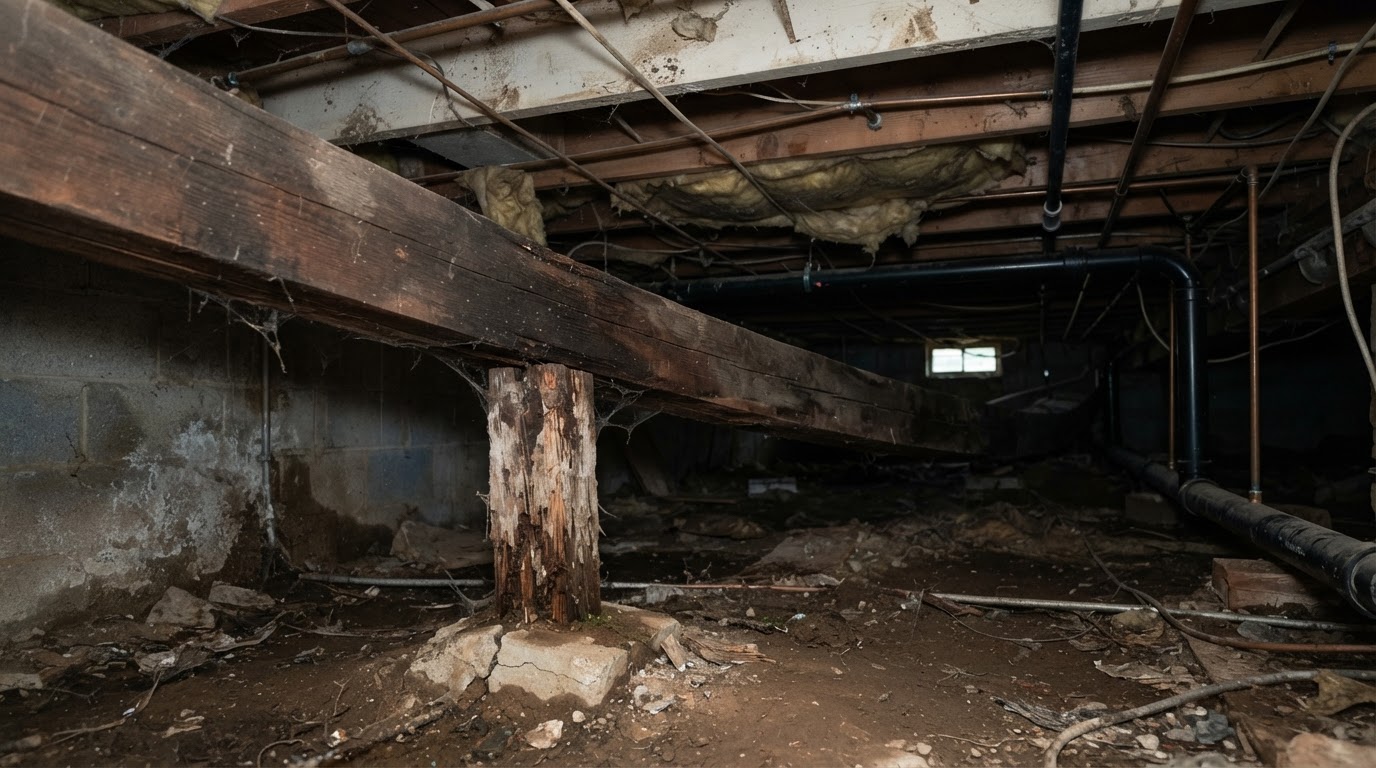
 BeforeAfter
Crawl Space Structural Repair & Support Jacks in Washington
Crawl-space structural repair may use properly designed support components to reinforce beams or floor framing when inadequate support contributes to sagging or uneven floors. The comparison represents an adjustable steel support-jack installation on a reinforced bearing surface.
Explore crawl space structural repair in Washington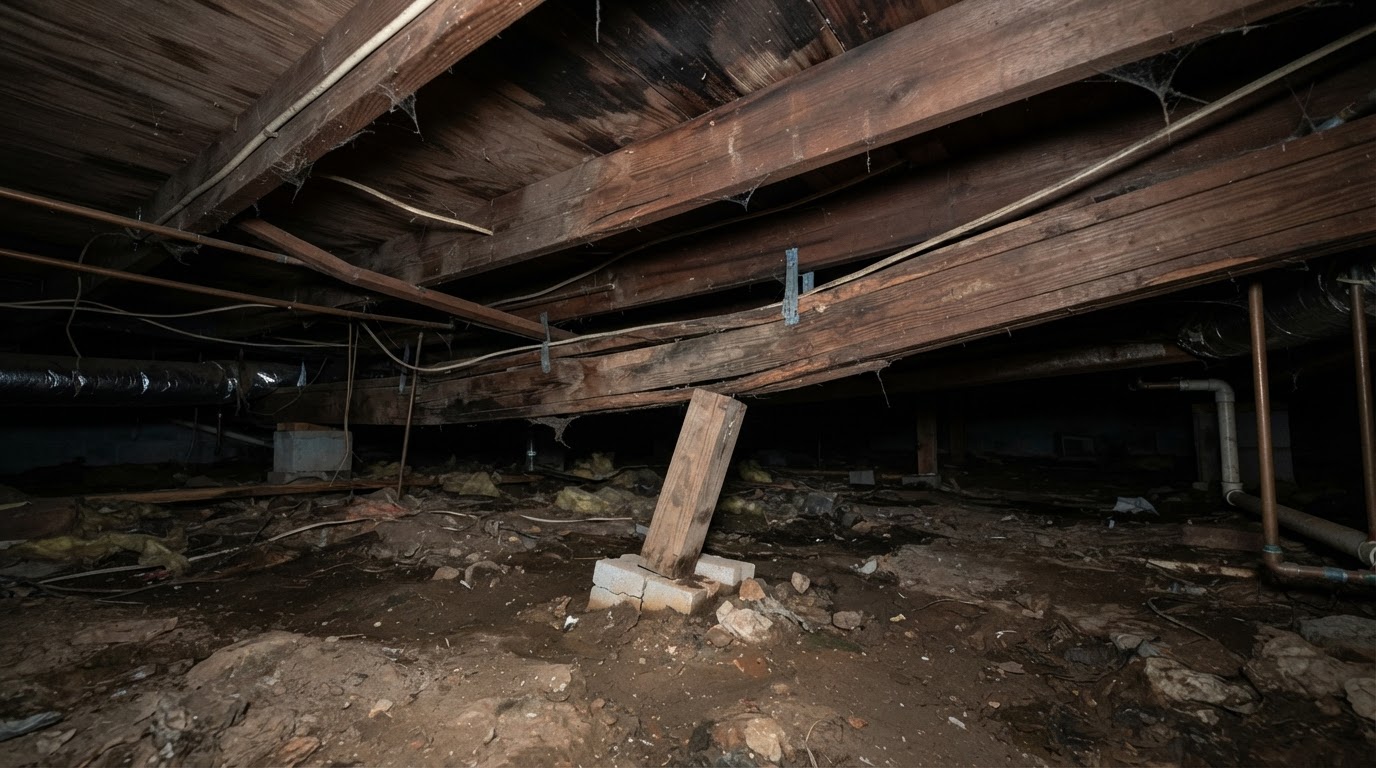
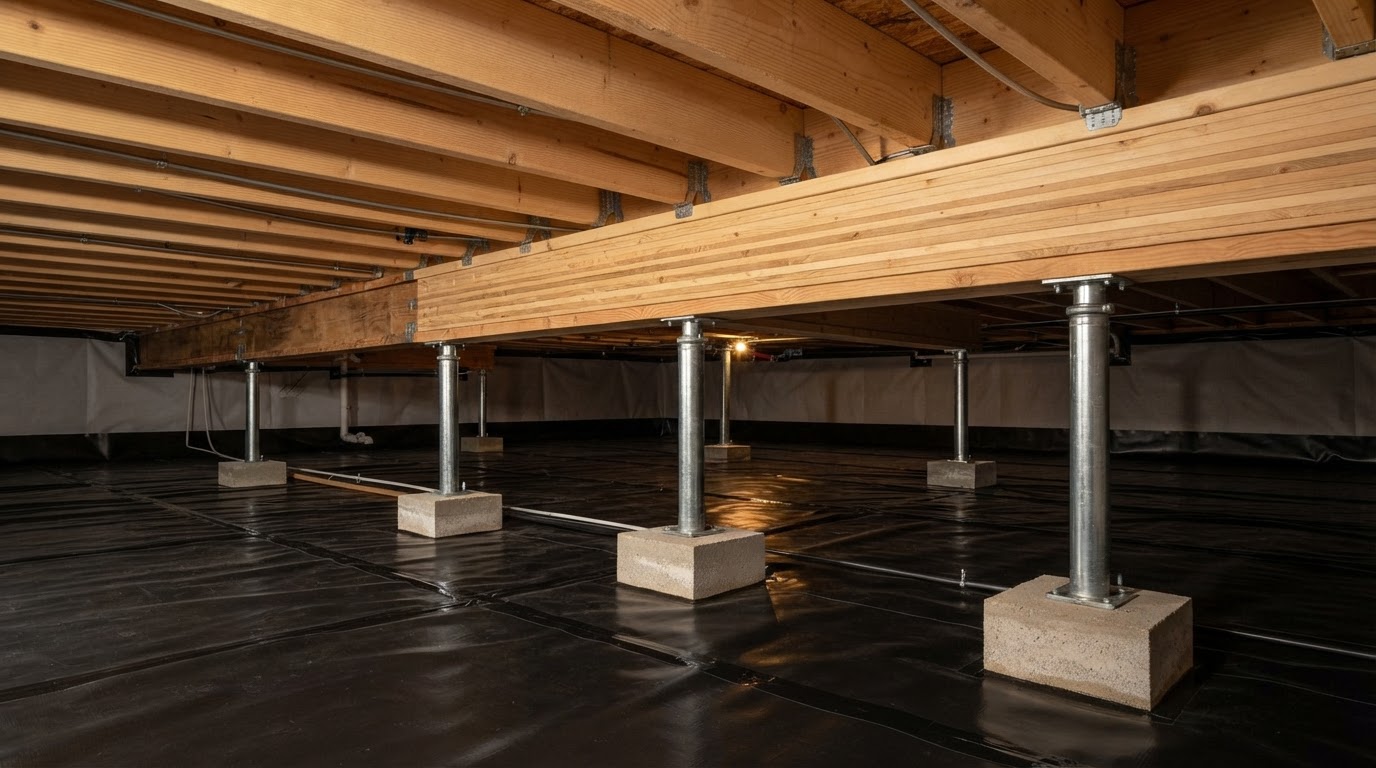 BeforeAfter
Sagging & Uneven Floor Repair Near Washington
Sagging or uneven floors may result from underlying beam, joist, support, or foundation conditions, and the appropriate repair depends on identifying the structural cause rather than treating only the visible floor surface. This comparison illustrates a supplemental beam and support-jack reinforcement scenario.
View sagging and uneven floor repair near WashingtonStart Your Foundation Repair Project in Washington
A foundation repair project can begin with details such as the property location, foundation type if known, the structural concern observed, visible cracks, wall or floor movement, suspected settlement areas, crawl-space conditions, existing repairs, photographs of affected areas, and a preferred appointment timeline. This information helps us prepare for an evaluation—it does not by itself confirm a structural problem.
Concerned About Your Foundation in Washington, DC?
If you have noticed cracks, settlement, bowing walls, or uneven floors at your Washington, DC property, discussing your observations is the first step toward understanding what is happening beneath it. Request an inspection or call to speak with a foundation repair contractor.
Waldorf Foundation Repair • Serving Washington, DC • District of Columbia • Southern Maryland