Foundation Underpinning in Waldorf, MD
Foundation underpinning refers to methods used to strengthen, stabilize, or extend the support of an existing foundation. Rather than replacing the foundation, underpinning adds deeper or additional support beneath the existing footing so the structure's load can be carried by more competent material. When a footing has lost bearing capacity—through settlement, soil changes, or inadequate original support—underpinning extends the foundation's reach down to stable ground. Foundation underpinning in Waldorf is a structural support solution, distinct from crack repair or waterproofing, focused on the load-bearing capacity of the foundation itself.
When Is Foundation Underpinning Used?
Underpinning is considered when an existing foundation can no longer provide adequate support for the structure above. Several conditions can lead to that point—not all cracks require underpinning, and the decision depends on confirming that a support problem exists.
Settlement
When a footing has lost support and is settling, underpinning extends support to competent material to arrest the movement.
Insufficient Support
When the original footing does not provide adequate bearing for the structure's load or the soil conditions.
Structural Changes
When changes to the structure—additions or loading changes—require deeper or stronger foundation support.
Foundation Movement
When ongoing movement indicates the existing support is no longer adequate for the conditions.
Additions & Load Changes
When a new addition or changed use increases the load beyond what the existing footing can carry.
Localized Sinking
When one corner, wall, or section has dropped while the rest remains stable, targeted underpinning addresses the affected area.
Existing Foundation Deficiencies
When the original foundation construction or soil preparation left the footing under-supported.
Not all cracks require underpinning. Many cracks result from shrinkage, thermal movement, or moisture changes rather than loss of footing support. Underpinning is appropriate when cracking is associated with confirmed settlement or differential movement. An evaluation determines whether the cracks reflect a support problem that underpinning would address.
Foundation Underpinning Methods Near Waldorf
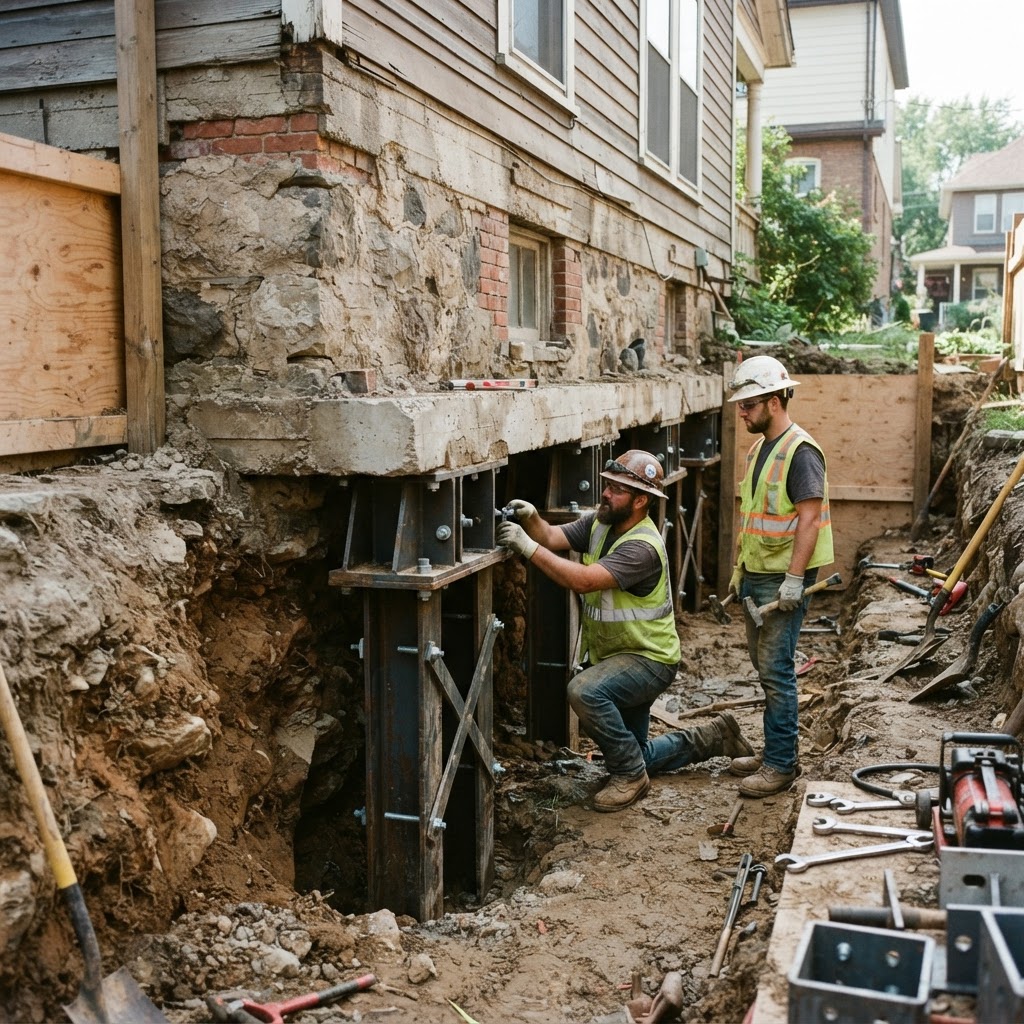
Underpinning encompasses several approaches, all aimed at strengthening or extending the existing footing's support. Pier-based systems are the most common, but the broader category includes other methods. Method selection depends on the structure, the load, the soil, and the access at the property.
Helical Pier Underpinning
Helical piers rotated into competent bearing material and bracketed to the footing, extending support below unstable soils.
Push Pier Underpinning
Hydraulically driven steel piers that use the building's weight to reach bearing material, suited to heavier structures.
Bracket-Supported Systems
Steel brackets that connect pier shafts to the existing footing, transferring load from the footing to the deep support.
Traditional Underpinning Approaches
Where appropriate, methods that deepen or reinforce the footing directly, rather than relying on driven piers.
Localized Support Solutions
Targeted underpinning at specific settled sections rather than along the entire foundation, where movement is concentrated.
Why method selection depends on structure and site
A heavier existing structure may favor push pier underpinning, while a lighter building or an addition may suit helical pier underpinning. Traditional approaches may apply where pier installation is impractical. The appropriate method is selected based on what the evaluation finds—not applied uniformly to every property.
Underpinning vs Crack Repair and Wall Stabilization
Underpinning is one category within foundation repair, focused specifically on the load-bearing support of the footing. Understanding how it differs from other repair types helps clarify when underpinning is the right response—and when another approach fits the condition better.
UnderpinningSupport Focus
Addresses structural support—strengthening, deepening, or extending the footing's bearing to arrest settlement and movement.
Crack Repair
Addresses the visible crack through sealing or injection; does not by itself restore footing support lost to settlement.
Wall Reinforcement
Addresses lateral wall movement through carbon fiber or steel; stabilizes walls against inward pressure rather than vertical support.
Waterproofing
Addresses water management and moisture; does not correct structural movement that has already occurred.
Crawl Space Support
Addresses floor joist and beam support beneath the home; a different support system from footing underpinning.
Cosmetic Repair
Addresses surface appearance—patching, painting, or finishing—without resolving underlying structural conditions.
Underpinning addresses structural support, not surface symptoms
The defining feature of underpinning is that it strengthens or extends the footing's load-bearing support. Crack repair, wall reinforcement, and waterproofing each address different problems. Sealing a crack or stabilizing a wall does not restore footing support lost to settlement—just as underpinning does not by itself stop water intrusion. Matching the repair type to the actual condition is the purpose of the evaluation.
How Foundation Underpinning Works in Waldorf, MD
Underpinning follows a sequence from evaluating the movement to transferring the load and restoring the work area. The exact scope varies by the method selected, the number of support locations, and access conditions.
Evaluate Movement
Confirm that settlement or support loss is the cause of the observed symptoms through inspection.
Identify Affected Areas
Determine which footing sections, corners, or walls require additional support.
Determine Stabilization Approach
Select the underpinning method based on the structure, load, soil, and access.
Access the Foundation
Excavate at each support location to expose the footing for bracket or support installation.
Install Support System
Install piers or other underpinning elements, advancing to competent bearing material.
Transfer Structural Load
Engage brackets to move the footing's load from compromised soil to the new support.
Evaluate Stabilization
Confirm that movement has been arrested and the load rests on competent material.
Restore Work Area
Backfill excavated areas and leave the site in order.
Foundation Underpinning FAQs for Waldorf Property Owners
Direct answers about what underpinning means, when a house needs it, how it differs from other foundation repairs, and how the appropriate method is selected for properties in Waldorf and Southern Maryland.
Considering Foundation Underpinning in Waldorf?
If your foundation is settling or has lost support, underpinning may be an appropriate way to strengthen or extend the footing's bearing capacity—depending on what the evaluation finds. Request an inspection or call to discuss whether underpinning fits your foundation condition with a contractor near Waldorf.
Waldorf Foundation Repair • Serving Waldorf, MD 20601 • Charles County • Southern Maryland