Foundation Settlement & Sinking Foundation Repair in Waldorf, MD
Foundation settlement occurs when portions of a foundation move downward or lose consistent support from the soil beneath. As supporting soil compresses, erodes, or shifts, the footing above can drop—producing sloping floors, stair-step cracks, sticking doors, and separation between structural elements. Settlement repair in Waldorf focuses on restoring support by transferring the structure's load to more competent bearing material below, stabilizing the foundation against further downward movement.
Signs of a Settling or Sinking Foundation Near Waldorf
Settlement produces recognizable patterns, but these signs can also result from other building conditions—framing movement, wood shrinkage, or finishing changes. A pattern of multiple symptoms developing over time is more likely to reflect genuine settlement than any single sign in isolation.
Exterior Wall Cracks
Cracks in exterior masonry, often stair-step or diagonal, that widen over time as sections of footing drop unevenly.
Stair-Step Cracking
Stepped cracks following mortar joints in block or brick, a classic indicator of differential settlement beneath the footing.
Interior Drywall Cracking
Diagonal cracks near doorways and windows inside the home, reflecting framing distortion above settling foundation sections.
Sloping Floors
Floors that pitch downward toward one side or the center of the home as support beneath shifts.
Door & Window Misalignment
Doors and windows that stick, bind, or develop gaps at their frames as framing twists with the foundation.
Foundation Separation
Gaps opening between the foundation and adjoining elements—chimneys, porches, or slab sections—as one area drops.
Chimney Separation
A chimney pulling away from the home or tilting, often because its separate footing has settled independently.
Porch or Addition Movement
Attached porches, patios, or additions settling away from the main structure, leaving visible gaps along flashing and siding.
Uneven Foundation Elevations
Measurable height differences across the foundation, where one section sits lower than adjacent sections.
Similar symptoms, different causes. Sloping floors can come from floor joist deflection rather than footing settlement. Sticking doors can result from seasonal wood movement. An evaluation that measures foundation elevations helps confirm whether the footing itself has actually dropped— the defining feature of true settlement.
What Causes Foundation Settlement?
Settlement happens when the soil supporting a footing can no longer provide uniform bearing capacity. Several conditions can reduce that capacity. Conditions vary by property, and no single cause applies to every Waldorf home—soil and support specifics require evaluation.
Changes in Soil Support
When bearing soil compresses, consolidates, or shifts, the footing loses the uniform support it was designed for and begins to drop.
Moisture Changes
Seasonal wet and dry cycles expand and contract soil, reducing bearing capacity and allowing intermittent settlement.
Drainage Issues
Poor drainage concentrates water near footings, eroding supporting material and weakening soil over time.
Erosion
Water flow that washes out fine particles from beneath or beside a footing creates voids that the foundation settles into.
Fill Conditions
Improperly compacted fill beneath a footing can consolidate under load, allowing the foundation above to drop.
Long-Term Consolidation
Even properly placed soil can consolidate gradually over years of sustained structural load.
Water-Related Soil Movement
Plumbing leaks or groundwater changes can soften or wash out bearing soils beneath a footing.
Disturbed Soils
Excavation, nearby construction, or changes to adjacent land can disturb the support conditions a footing relies on.
How a Sinking Foundation Can Be Stabilized
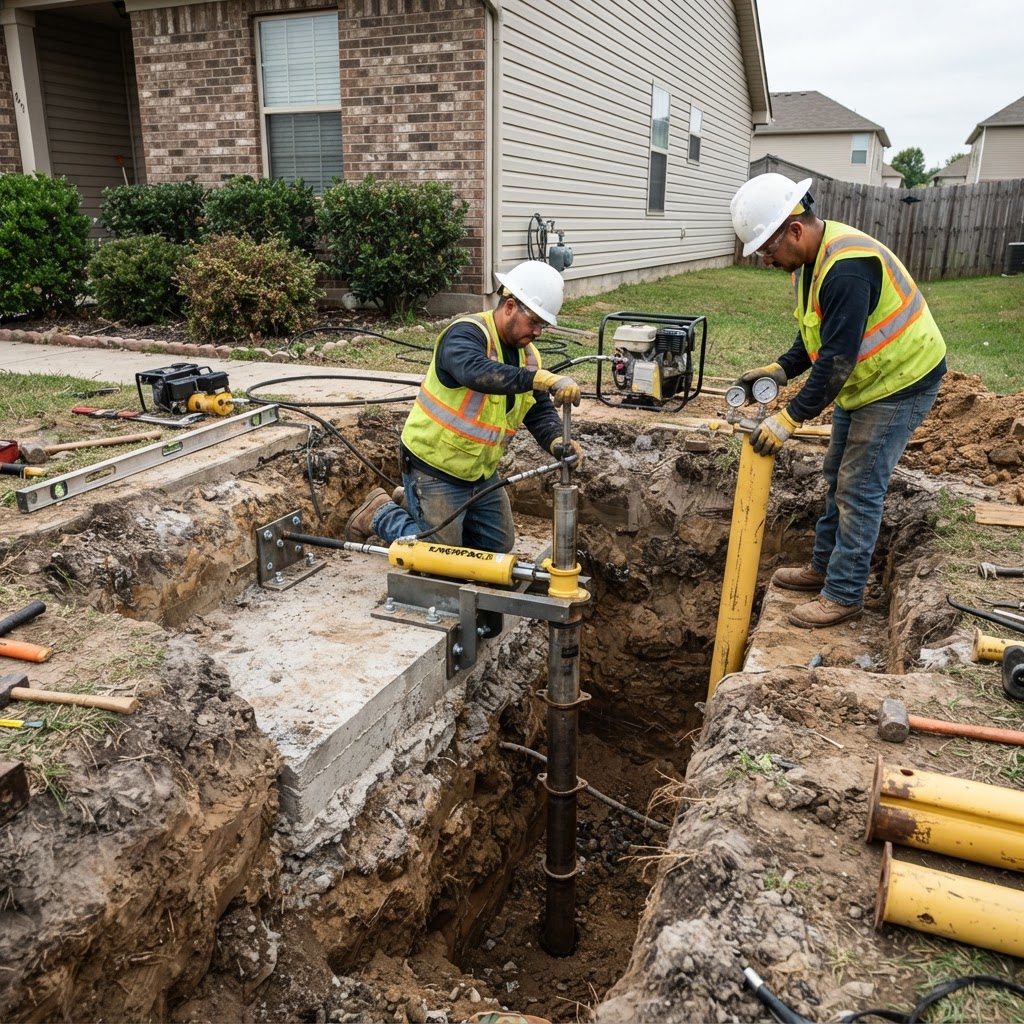
Stabilizing a settling foundation typically involves extending support below the unstable near-surface soil to more competent bearing material. The appropriate system depends on the structure, the load, the soil, and access—determined through evaluation rather than assumed.
Helical Piers
Steel shafts with helical plates rotated into competent bearing strata. Well suited to lighter structures, additions, and porches where rotational installation is practical.
Push Piers
Hydraulically driven steel sections that use the building's weight as reaction force to reach firm bearing. Commonly used on heavier existing structures.
Foundation Underpinning
Methods that strengthen, deepen, or extend footing support to arrest settlement and restore load-bearing capacity.
Support Transfer & Stabilization
The core mechanism across pier systems: moving the structure's load from compromised soil to stable bearing material to stop downward movement.
Stabilization
Arresting further downward movement by transferring load to competent bearing material. This is the primary objective of settlement repair.
Lifting
Controlled movement back toward original elevation, which may be possible in appropriate conditions but is not guaranteed for every project.
Leveling
Bringing a settled section closer to the elevation of stable sections; realistic only when the structure and framing can tolerate the adjustment.
Stabilization versus guaranteed lifting
We do not promise that every settling foundation can be returned to its original elevation. The primary goal is stabilization—stopping further movement. Whether controlled lifting is realistic depends on the structure, the age of the movement, and the condition of the framing above. An evaluation sets realistic expectations for each property.
Foundation Settlement Repair Near Waldorf, MD
Settlement repair follows a sequence from evaluation to load transfer. The exact scope varies by property—the number of support locations, access conditions, and whether controlled lifting is part of the plan.
Inspection & Evaluation
Review visible symptoms and assess foundation elevations to confirm whether settlement has occurred.
Elevation Assessment
Where appropriate, measure floor and footing elevations to map where movement is concentrated.
Identify Affected Sections
Determine which walls, corners, or footings have dropped and where support has been lost.
Select Stabilization Locations
Choose pier locations and the appropriate system based on the structure, load, and soil conditions.
Install Support System
Install piers or underpinning, advancing each support to competent bearing material.
Transfer Structural Load
Engage brackets to transfer the footing's load from compromised soil to the new supports.
Controlled Lifting
Where appropriate and the structure tolerates it, apply controlled lifting toward original elevation.
Final Evaluation
Review stabilized elevations, confirm movement has been arrested, and discuss drainage maintenance.
Related Foundation Services
Foundation Settlement FAQs for Waldorf Property Owners
Direct answers about differential settlement, pier stabilization, lifting versus leveling, and what to expect when one section of a Waldorf home appears lower than another.
Is One Side of Your Waldorf Home Settling?
If you have noticed sloping floors, stair-step cracks, sticking doors, or a chimney pulling away, those may be signs of foundation settlement. Discussing your observations with our team is the first step toward confirming whether the footing has dropped and what stabilization options fit your property. Request an inspection or call to speak with a foundation repair contractor about settlement near Waldorf.
Waldorf Foundation Repair • Serving Waldorf, MD 20601 • Charles County • Southern Maryland
Waldorf Foundation Repair provides foundation services in Waldorf and surrounding communities throughout Charles County and Southern Maryland. For a broader view of our structural capabilities, see the main foundation repair page.