Sagging & Uneven Floor Repair in Waldorf, MD
Uneven floors can be related to several different conditions—foundation settlement, crawl space support problems, framing deflection, or localized structural deterioration. Because a sloping or sagging floor is a symptom rather than a diagnosis, the right repair depends on identifying what is actually moving beneath the floor before selecting a repair approach. This page focuses on evaluating the structural source of floor movement and the repair methods that address it directly, from crawl space support jacks to foundation stabilization.
Signs of Sagging or Uneven Floors in Waldorf Homes
Sagging and uneven floors announce themselves through a handful of recognizable signs. The degree, location, and whether the movement is progressing all matter—because houses are not always perfectly level, and some amount of slope in an older home can be stable rather than active.
Sloping Surfaces
Floors that tilt in one direction, often toward a settled footing or failed crawl space support.
Visible Dips
Localized low spots in the floor, frequently above a single settled pier or a damaged joist.
Bouncy Floors
Floors that flex underfoot, usually from undersized joists or supports spaced too widely.
Furniture Unlevel
Furniture that rocks or appears tilted even on a floor that looks flat at a glance.
Gaps Near Baseboards
Spaces opening between the baseboard and the floor as the floor structure shifts beneath.
Doors Rubbing
Interior doors that stick or rub because the wall or floor framing has moved beneath them.
Cracked Finishes
Drywall or tile cracks that follow the movement of the floor structure below.
Uneven Transitions
Floor transitions between rooms that have become uneven as one area settles relative to another.
Localized Low Spots
A single room or corner that sits lower, which can point to a localized support or footing problem.
Houses are not always perfectly level. Some slope in an older home can be stable and not reflect ongoing movement. What matters is whether the floor is changing—new dips, progressing slopes, or floors that have recently begun to bounce—alongside other signs like cracking or sticking doors. An evaluation distinguishes stable character from active structural movement.
What Causes Floors to Sag or Slope?
Floors sag or slope when the structure beneath them can no longer provide consistent support. The cause may be in the foundation, in the crawl space supports, or in the floor framing itself—and each points to a different repair.
Foundation Settlement
A footing that has dropped pulls the structure above it down, creating a slope that follows the settled area.
Crawl Space Support Settlement
Piers or columns that have settled, dropping the beam and the floor above it.
Beam Deflection
A main beam that has bowed under load, allowing the floor it supports to dip along its span.
Joist Deflection
Joists that are undersized or over-spanned, flexing underfoot and producing bounce or sag.
Insufficient Support
Supports that are too few or too far apart for the load the floor now carries.
Damaged Framing
Split, rotted, or otherwise damaged framing members that have lost structural capacity.
Structural Load Changes
Additions or renovations that place more load on the original support than it was designed for.
Moisture-Related Deterioration
Crawl space moisture that rots joists and beams, reducing their ability to carry the floor.
Localized Support Failure
A single failed pier or damaged joist that drops one area while the rest remains stable.
Foundation movement versus floor framing movement
The key distinction is whether the floor is moving because the foundation beneath it has settled, or because the framing and supports within the crawl space have deflected or failed. Foundation movement often produces slope across a wider area and is accompanied by stair-step cracks or sticking doors; floor framing movement is often more localized and may produce bounce without cracking. An evaluation of both determines which level the repair should address.
Structural Floor Repair Options Near Waldorf
The repair method depends on whether the cause is in the foundation or in the floor framing. Not every floor can be restored to perfectly level, and the goal is sometimes stabilization rather than full leveling—depending on what the structure can safely tolerate.
Support Jacks
Adjustable structural posts on proper footings that re-support sagging beams and allow controlled adjustment toward level.
Beam Reinforcement
Sistering or reinforcing main beams to increase load capacity and reduce deflection along the span.
Joist Reinforcement
Reinforcing or sistering joists that have deflected or lost strength to restore floor support.
Support Beam Installation
Adding intermediate support beams where spans are too long for the existing framing.
Localized Footing Repairs
Stabilizing or replacing a single settled pier or footing that has dropped one area.
Foundation Stabilization
Pier systems or underpinning where the floor slope is caused by footing settlement beneath the crawl space.
Stabilization
Stabilization arrests further movement so the floor does not continue to sag or slope. It is the appropriate goal when full leveling would risk stressing the structure, or when the deflection has been present long enough that the framing has adapted to its current shape.
Leveling
Leveling attempts to bring the floor back toward its original elevation through controlled lifting or adjustment. It is realistic only when the structure can tolerate the forces involved, and not every floor can be returned to perfectly level—especially after long-term deflection.
How Uneven Floor Problems Are Evaluated
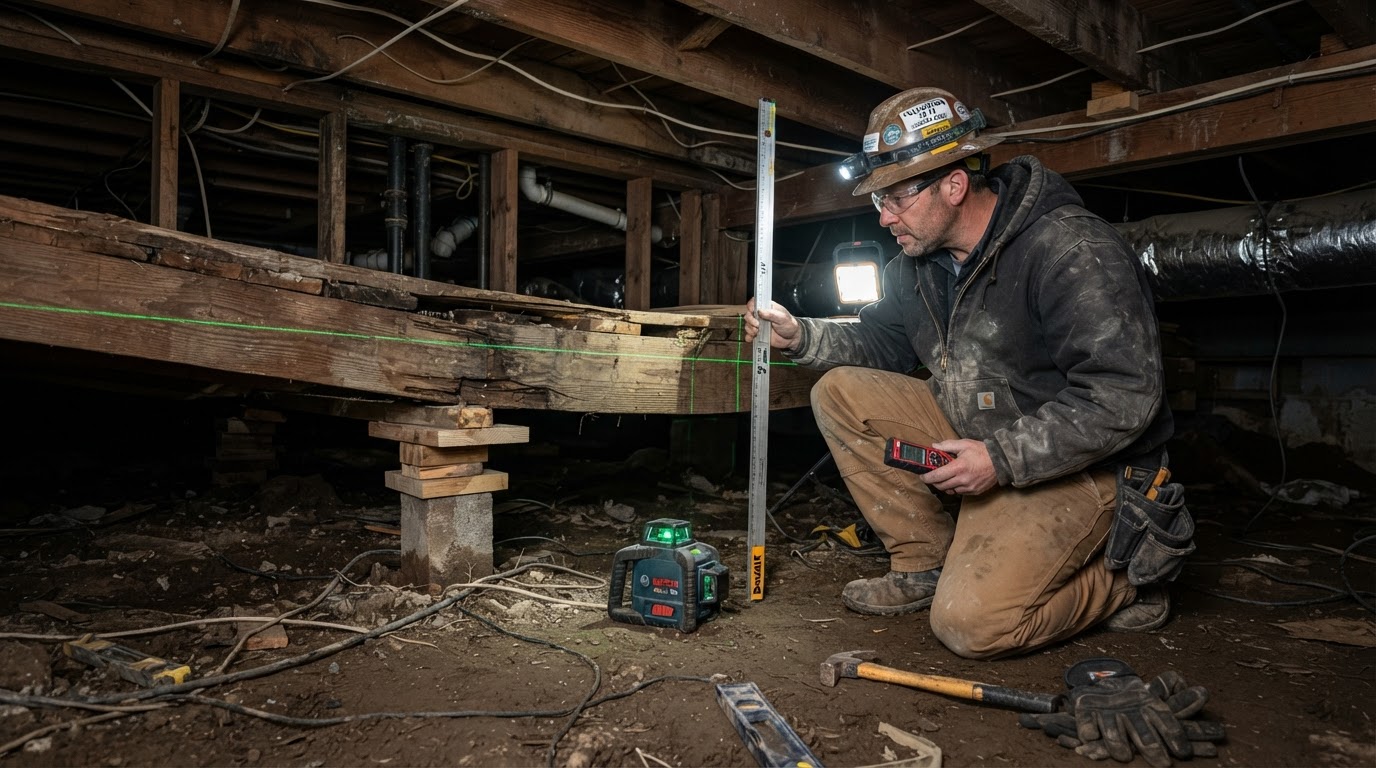
Evaluating an uneven floor means looking at both the floor and the structure beneath it. The evaluation identifies where the movement is, what is causing it, and whether the repair should address the foundation, the crawl space supports, or the floor framing.
Floor Elevation
Mapping where the floor dips, slopes, or sits uneven to locate the affected areas.
Dip & Slope Location
Identifying whether the movement is localized or spans a wider area of the home.
Foundation Condition
Checking for settlement, cracking, or movement in the foundation beneath the floor.
Crawl Space Supports
Inspecting beams, joists, piers, and columns for deflection, damage, or settlement.
Beam & Joist Condition
Reviewing framing for splits, rot, undersizing, or deflection along the span.
Doors & Openings
Checking whether doors rub or bind, which helps map how the structure has shifted.
Cracking Patterns
Reviewing drywall, tile, or exterior cracks that follow the floor movement.
Moisture Conditions
Assessing crawl space moisture that may be contributing to framing deterioration.
Related Foundation Services
Sagging & Uneven Floor FAQs
Direct answers about sagging floors, bouncy floors, floor leveling, and how to tell whether the cause is the foundation or the floor framing for homes in Waldorf and Southern Maryland.
Uneven or Sagging Floors in Your Waldorf Home?
If you have noticed floors that slope, sag, bounce, or dip, the first step is identifying what is moving beneath them—whether it is the foundation, the crawl space supports, or the floor framing. Request an inspection or call to discuss what you are seeing with a foundation repair contractor near Waldorf.
Waldorf Foundation Repair • Serving Waldorf, MD 20601 • Charles County • Southern Maryland